
Magel Tyala Solar Pump Yojana 2026 : For farmers in Maharashtra, access to reliable irrigation can directly affect crop planning and farm income. The Magel Tyala Saur Krushi Pump Yojana helps eligible farmers access solar-powered agricultural pumps, particularly those who have a reliable water source but do not have a regular electricity connection for irrigation.
Under the scheme, farmers do not have to bear the entire cost of the solar pumping system. The Maharashtra State Electricity Distribution Company Limited (MSEDCL) states that General category beneficiaries contribute 10% of the pump cost, while Scheduled Caste and Scheduled Tribe beneficiaries contribute 5%. The remaining amount is subsidised by the Central and State Governments.
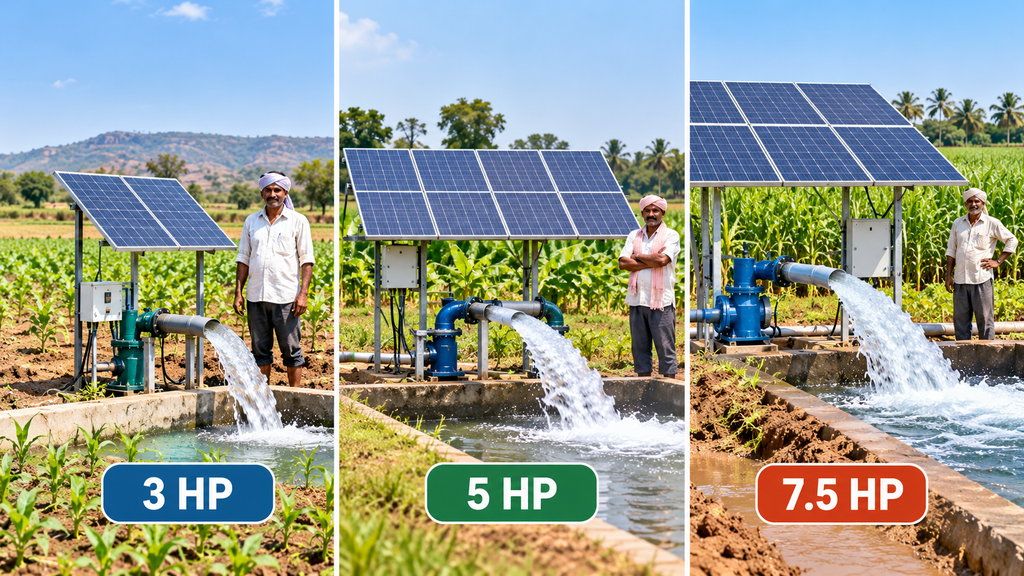
The scheme provides solar pumps in 3 HP, 5 HP and 7.5 HP capacities, with the eligible capacity determined mainly by the farmer’s landholding. The official MSEDCL portal is currently active and provides facilities for new applications, application-status checking and beneficiary payments.
Magel Tyala Solar Pump Yojana: Key Details
| Feature | Details |
|---|---|
| Scheme Name | Magel Tyala Saur Krushi Pump Yojana |
| State | Maharashtra |
| Implementing Department | Maharashtra State Electricity Distribution Co. Ltd. (MSEDCL) |
| Farmer Contribution | 10% for General farmers and 5% for SC/ST farmers |
| Government Subsidy | The remaining cost is covered through government subsidy |
| Pump Capacity | 3 HP up to 2.5 acres, 5 HP for 2.51–5 acres, and 7.5 HP for more than 5 acres |
| Insurance & Maintenance | Repair and insurance support for 5 years |
| Eligibility | Farmers with eligible water sources such as wells, borewells, farm ponds or perennial water sources |
| Online Application | Through the official MSEDCL solar pump portal |
What Is Magel Tyala Solar Pump Yojana 2026?
Magel Tyala Saur Krushi Pump Yojana is a Maharashtra government initiative for installing off-grid solar agricultural pumps. The programme is intended primarily for farmers who have a sustainable water source but do not have conventional electricity supply available for agricultural irrigation.
The Maharashtra Energy Department says the scheme was announced with a target of installing 10 lakh agricultural solar pumps for new connections over five years. The department also identifies the programme as a scheme for off-grid solar pumps.MSEDCL is responsible for implementing the scheme and operates the dedicated application portal.
The basic idea is straightforward: instead of depending entirely on grid electricity or diesel for irrigation, an eligible farmer can use a solar-powered pumping system during daylight hours.
How Much Subsidy Is Available Under Magel Tyala Solar Pump Yojana?
Eligible farmers do not have to bear the entire cost of the solar pump, as a major portion of the cost is covered through government subsidy.For General category beneficiaries, the farmer’s contribution is 10% of the solar agricultural pump price. For Scheduled Caste and Scheduled Tribe beneficiaries, the contribution is 5%. The remaining amount is subsidised by the Central and State Governments.
Therefore, the scheme can effectively provide government support of up to about 90% for General category beneficiaries and 95% for SC/ST beneficiaries, based on the stated beneficiary contribution.However, farmers should not assume that every pump has the same total price. The contribution depends on the approved pump/system cost and applicable capacity. The amount payable should be checked through the official application and payment process rather than relying on figures circulated on social media.
Magel Tyala Solar Pump Capacity Based on Landholding
The pump capacity is linked to the size of agricultural land held by the farmer.
| Agricultural Land | Eligible Solar Pump Capacity |
|---|---|
| Up to 2.5 acres | 3 HP |
| 2.51 to 5 acres | 5 HP |
| Above 5 acres | 7.5 HP |
MSEDCL also states that a farmer can request a solar pump with a capacity lower than the maximum capacity for which the farmer is eligible.
This landholding-based structure is important because the scheme is not designed around one standard pump for every applicant. The appropriate capacity depends on the farmer’s eligible landholding and the requirements of the agricultural site.
Who Is Eligible for Magel Tyala Solar Pump Yojana?
The scheme is mainly meant for farmers who have a reliable water source for irrigation but do not have a regular electricity connection to run their agricultural pump.
According to MSEDCL, farmers with assured water sources such as wells, borewells and perennial rivers or streams can be considered under the scheme. Owners of individual or community farm ponds can also be eligible. However, the solar pumps cannot be used to draw water from water reservoirs created under water-conservation works.
MSEDCL gives preference to farmers who already have a pending application or have made a payment for a new agricultural electricity connection but have not yet received the connection.Farmers who have already benefited from certain earlier Maharashtra solar-pump schemes, including Atal Saur Krushi Pump Yojana-1, Atal Saur Krushi Pump Yojana-2 and Mukhyamantri Saur Krushi Pump Yojana, are not eligible under the stated beneficiary selection criteria.
Magel Tyala Solar Pump Yojana Documents Required
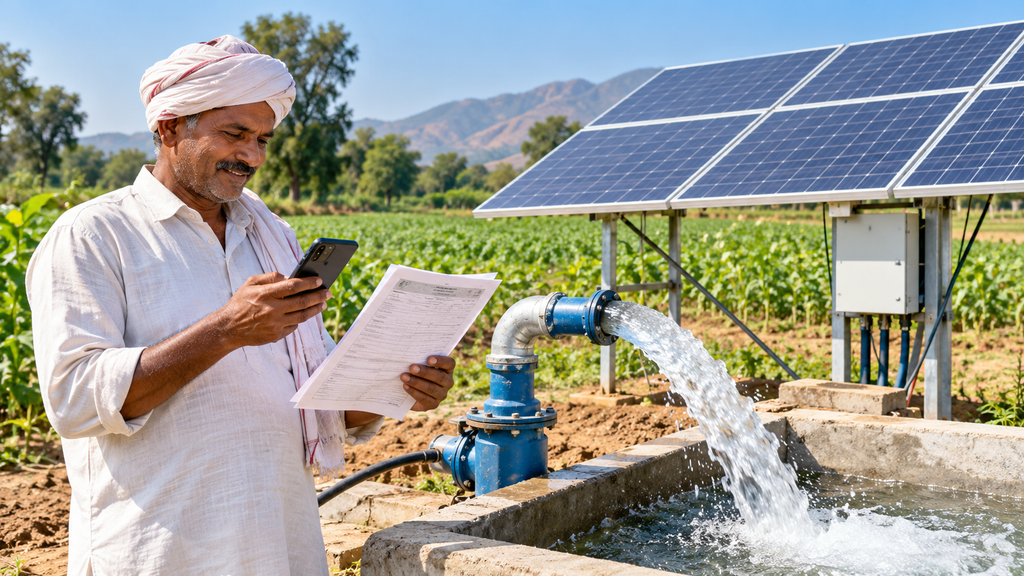
Applicants should keep the required land and identity documents ready before starting the online application.
According to the official MSEDCL FAQ, the key documents include:
- 7/12 extract of the agricultural land, including the water-source record
- Aadhaar Card
- Caste certificate for eligible SC/ST beneficiaries
- If the land is jointly owned, the applicant may need to submit a No Objection Certificate (NOC) from the other landowners or shareholders.
- If the water source is located in a notified dark zone, an NOC from the Ground Water Survey Department may also be required.
Applicants must also provide their mobile number along with details about the water source and the proposed installation site while filling out the application.Farmers should make sure that the details on the land records and Aadhaar are accurate before submitting the application. If the land is jointly owned, the required consent documentation should also be arranged beforehand.
Steps to Apply for Magel Tyala Solar Pump Yojana Online?
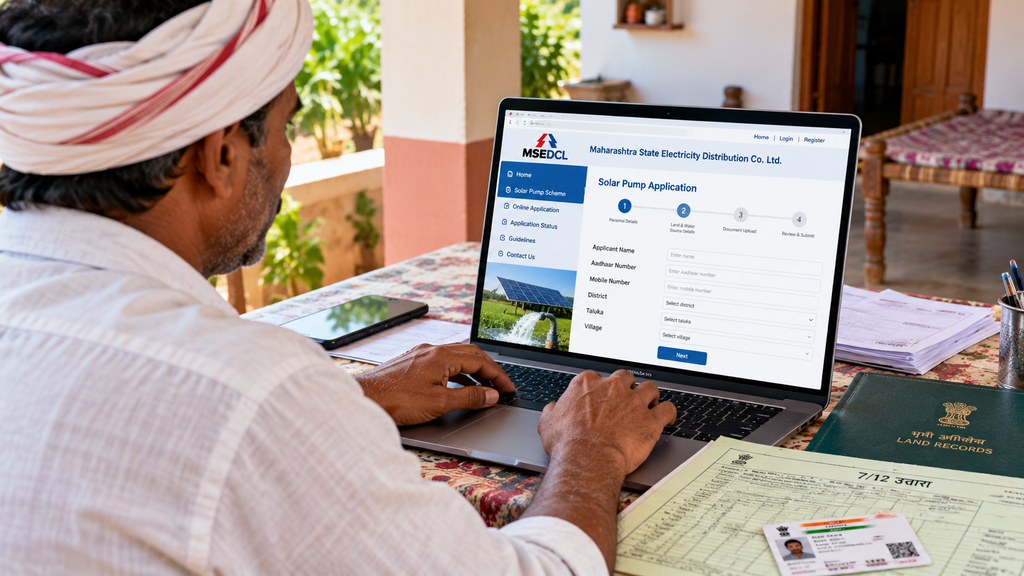
The application process is handled through the dedicated MSEDCL portal.
Step 1: Visit the Official Portal
Farmers should use the official MSEDCL Magel Tyala Saur Krushi Pump portal rather than third-party websites.The current portal provides options for new applications for landowners, applications for Forest Rights Land and Lift Irrigation System registration.
Step 2: Select the Appropriate Application
Choose the application category that applies to the agricultural land and complete the required information.According to the MSEDCL FAQ, applicants need to submit the A-1 application form online through the official portal.
Step 3: Enter Farmer and Land Details
The applicant needs to provide personal information, agricultural-land details and information about the available water source.The information should match the official land records.
Step 4: Upload Documents
Upload the required documents, including the 7/12 extract, Aadhaar and caste certificate where applicable. Joint landholders may also need to provide the required NOC.
Step 5: Submit the Application
After checking all details, submit the application online.MSEDCL states that the applicant receives a beneficiary number and application information through SMS after submitting the form.
How to Check Magel Tyala Solar Pump Application Status?
Applicants can track their application through the official MSEDCL portal.After submission, the beneficiary number is communicated through SMS. The same number can be used to check the application’s progress through the portal. MSEDCL also sends information about different stages of the application through SMS.
The current beneficiary portal specifically provides an Application Current Status facility along with the payment option.Farmers should keep their beneficiary number safely until the entire installation process is completed.
Is There a Payment After Application Approval?
Yes. The farmer’s contribution is an important part of the process.The official MSEDCL information states that General category beneficiaries pay 10% of the solar agricultural pump price, while SC/ST beneficiaries pay 5%.
The current MSEDCL portal also provides a dedicated Make Payment facility for beneficiaries.Applicants should make payments only through the official process and should be cautious about individuals asking for money through personal bank accounts, WhatsApp or unofficial payment links.
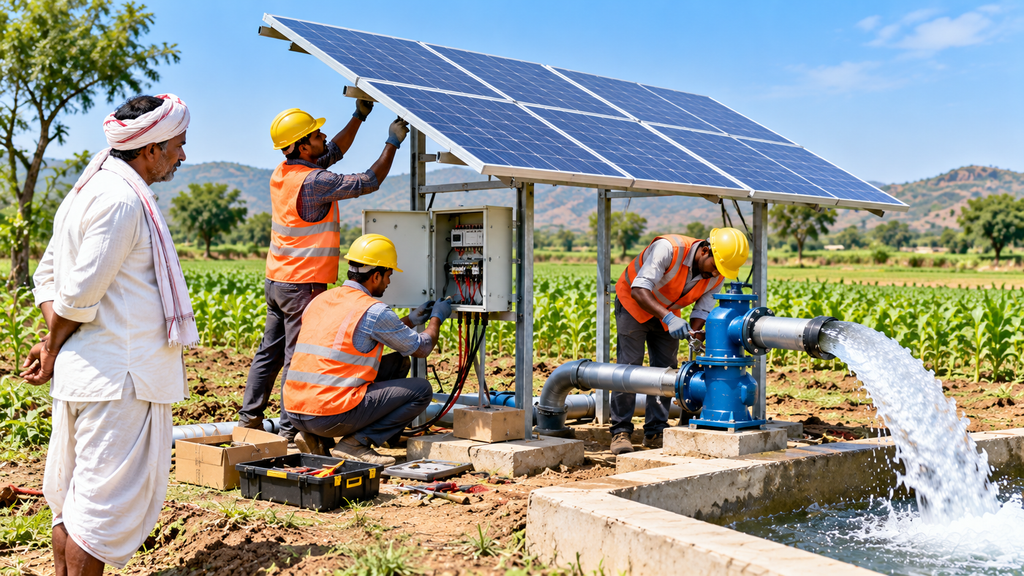
What Are the Benefits of the Solar Pump?
The most immediate benefit is that farmers can operate the pump using solar energy during daylight hours.Because the pump does not depend on conventional electricity for its operation, irrigation is less affected by power cuts, low voltage and certain problems associated with conventional agricultural electricity connections. MSEDCL also highlights the absence of recurring electricity or diesel costs for operating the solar pump.
The system can also be useful in areas where grid electricity is unavailable or where obtaining diesel regularly is difficult.Another advantage is lower routine maintenance compared with systems that depend on fuel engines, although solar panels need to be cleaned regularly to maintain their efficiency.
Five-Year Repair and Insurance Coverage
A particularly important feature for farmers is the stated five-year repair and maintenance period.MSEDCL says that if the solar agricultural pump stops functioning during this period, the agency is responsible for repairing it free of charge within the specified repair and maintenance period. Farmers should report problems promptly through MSEDCL’s toll-free service and the customer service centre of the concerned agency.
The pump is also insured for five years, according to the official FAQ. In case of theft or damage, the farmer should immediately file an FIR and inform MSEDCL and the concerned agency.
Can the Solar Pump Be Shifted or Sold?
This is an important condition that applicants should understand before accepting the pump.According to MSEDCL, an installed solar agricultural pump cannot simply be moved to another location. The official FAQ also states that beneficiary farmers are prohibited from selling or transferring the solar agricultural pump. Action may be taken if the pump is sold or transferred in violation of the applicable conditions.
This means farmers should carefully consider the installation location and ensure that the water source and irrigated agricultural area are properly identified during the application and installation process.
Where Should the Solar Pump Be Installed?
The location of the solar panels matters because their performance depends on sunlight.MSEDCL says the panels should be installed in a shade-free area, with suitable space and access for cleaning. The surface should be reasonably level, and the panels should be positioned to receive maximum solar irradiation. The pump should be located close to the panels and water source while remaining within the area to be irrigated.
For farmers, this means installation is not simply a matter of placing the panels anywhere on the farm. The location should be selected with sunlight, water source and irrigation requirements in mind.
Magel Tyala Solar Pump Yojana vs Traditional Agricultural Pump
The difference is primarily in the energy source.
A conventional agricultural pump depends on grid electricity or, in some cases, diesel. A solar agricultural pump uses electricity generated by solar panels.
| Feature | Solar Agricultural Pump | Conventional Pump |
|---|---|---|
| Main energy source | Solar energy | Grid electricity/diesel |
| Daytime irrigation | Yes | Depends on power supply |
| Electricity bill for operation | No recurring electricity cost | Applicable depending on connection |
| Diesel requirement | No | Required for diesel pumps |
| Effect of power cuts | Not dependent on grid supply | Can affect irrigation |
| Routine maintenance | Relatively low | Depends on pump type |
| Initial farmer contribution under scheme | Subsidised | Not applicable under this scheme |
The important point is that solar pumping reduces dependence on conventional energy for irrigation, but its usefulness still depends on a suitable water source and adequate sunlight.
What Happens After the Application?
Application submission is only the beginning of the process. The application and documents are subject to verification, after which the beneficiary is informed about subsequent stages.The official portal provides facilities for application status, beneficiary contribution payment and vendor-related processes.
The current MSEDCL system also has separate processes relating to empanelled vendors and installation management.Farmers should therefore avoid assuming that submitting the form automatically means immediate installation. The actual timeline can depend on verification, approval, payment, vendor allocation and installation-related stages.
Also Read :
- Lado Lakshmi Yojana 2026: Eligibility, ₹2,100 Monthly Benefit, Registration & Latest Update
- UP Yuva Hub Yojana 2026: Benefits, Eligibility, Registration and Latest Updates
What This Scheme Means for Maharashtra Farmers
The importance of Magel Tyala Solar Pump Yojana goes beyond the installation of individual pumps.
Maharashtra has a large agricultural sector where irrigation is closely connected with access to reliable power. Solar pumping offers a way to reduce dependence on conventional electricity and diesel while making daytime irrigation more predictable.
The Maharashtra Energy Department’s stated target of 10 lakh agricultural solar pumps over five years indicates the scale at which the state intends to expand off-grid solar irrigation.
The programme also fits into Maharashtra’s broader push towards solarisation of agricultural electricity supply. In February 2026, the Governor’s address to the Maharashtra Legislature stated that 6,63,324 solar agricultural pumps had been installed under PM-KUSUM-B and the Magel Tyala Saur Pump Scheme, while also reporting a major installation drive during late 2025.
For farmers, the practical question is not simply whether solar energy is useful. It is whether their land, water source and existing electricity status meet the scheme’s conditions. That is why checking the official eligibility criteria before paying any contribution is essential.
What the Available Information Shows
The official MSEDCL information clearly establishes the scheme’s central features: subsidised solar agricultural pumps, 3 HP to 7.5 HP capacities based on landholding, a 10% General category contribution, a 5% SC/ST contribution, a sustainable water-source requirement and five-year repair coverage.
The current MSEDCL portal also shows that the application system is operational and includes facilities for new applications, status checking and beneficiary payments.
Farmers should nevertheless rely on the official portal for the amount payable in their individual case, application availability and any updated instructions, rather than treating older scheme articles as definitive.
Important Points Before Applying
Before applying for Magel Tyala Solar Pump Yojana 2026, farmers should first confirm that they have an eligible and sustainable water source.
They should then check their landholding to understand whether they fall into the 3 HP, 5 HP or 7.5 HP category.
The 7/12 land record should contain the required water-source information, and joint landowners should arrange the necessary NOC before applying.
SC/ST applicants who want to claim the applicable lower beneficiary contribution should keep their caste certificate ready.
In Conclusion
Magel Tyala Solar Pump Yojana 2026 is designed to address a practical problem in Maharashtra agriculture: the difficulty of securing dependable energy for irrigation. By combining government subsidy with off-grid solar technology, the scheme reduces the farmer’s upfront financial burden while offering daytime irrigation without dependence on conventional electricity or diesel.
But the headline subsidy should not be the only consideration. Eligibility depends on the farmer’s landholding, water source and previous benefits under related solar-pump schemes. The pump capacity is determined according to the landholding, while the farmer still has to make the applicable contribution.
For anyone planning to apply, the safest approach is simple: check the official MSEDCL eligibility conditions, prepare the 7/12 extract and other documents, submit the application through the official portal, keep the beneficiary number safe and make any payment only through the authorised system.
FAQ Section
What is Magel Tyala Solar Pump Yojana 2026?
Magel Tyala Saur Krushi Pump Yojana is a Maharashtra government scheme for providing off-grid solar agricultural pumps to eligible farmers.
How much subsidy is available under Magel Tyala Solar Pump Yojana?
General category beneficiaries are required to contribute 10% of the solar agricultural pump price, while SC/ST beneficiaries contribute 5%.
Which farmers can apply for the scheme?
Farmers with a sustainable water source and without conventional electricity supply for agricultural irrigation can benefit, subject to the scheme’s conditions. Eligible water sources can include wells, borewells, farm ponds and certain perennial rivers or streams. Farmers who have already benefited from specified earlier Maharashtra solar-pump schemes are excluded.
Which solar pump is available for 2.5 acres of land?
A farmer holding agricultural land up to 2.5 acres is eligible for a 3 HP solar agricultural pump. Landholdings between 2.51 and 5 acres are linked to 5 HP, while land above 5 acres is linked to 7.5 HP. A lower-capacity pump can also be requested.
What documents are required for Magel Tyala Solar Pump Yojana?
The official MSEDCL FAQ lists the 7/12 land record with water-source information, Aadhaar Card and caste certificate for SC/ST beneficiaries. Joint landowners may need to provide an NOC, while a Ground Water Survey Department NOC is required in the stated dark-zone cases.






One Comment