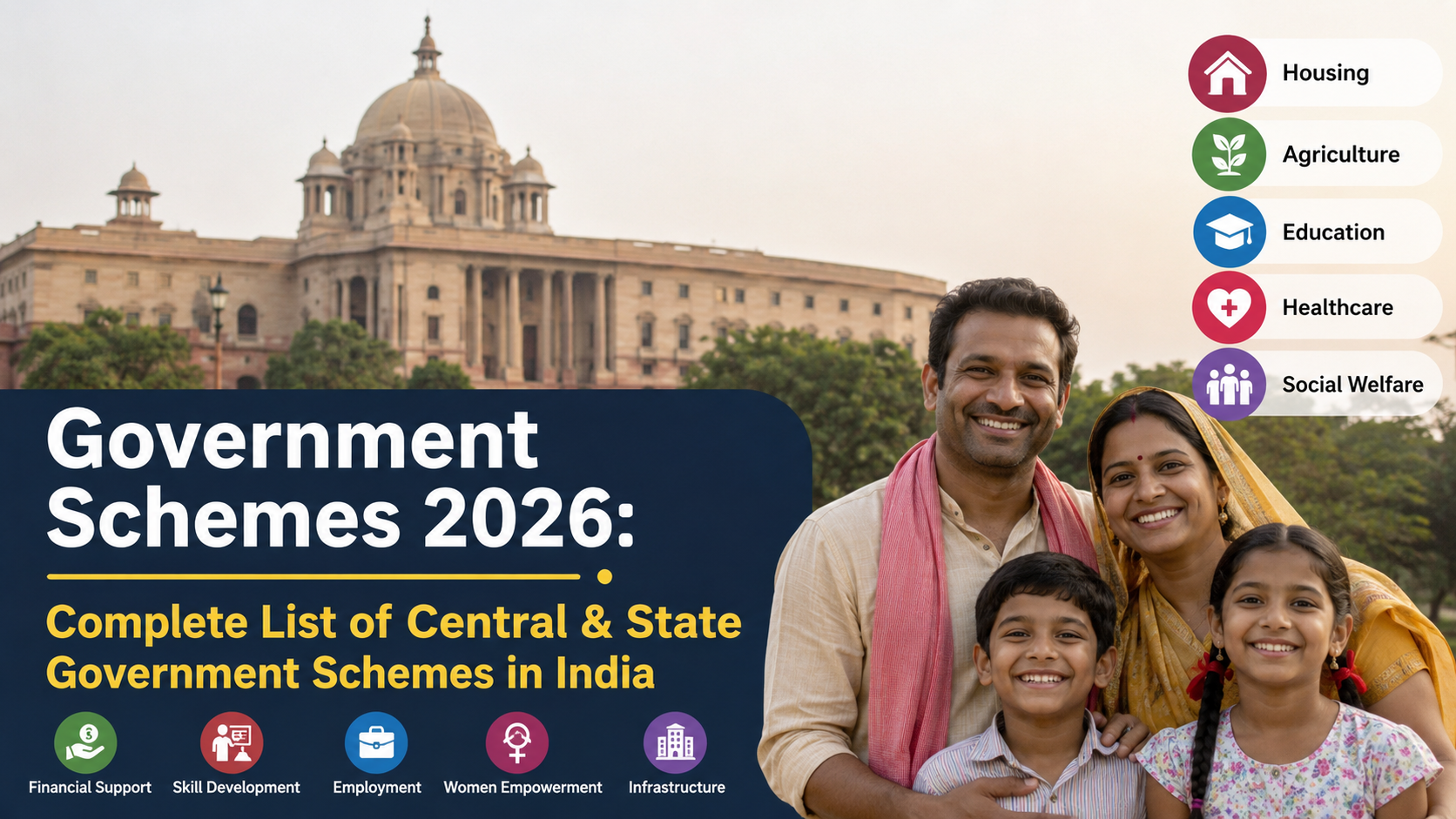
Government schemes 2026: Government schemes play a major role in improving the lives of millions of people across India. Every year, the Central Government and State Governments introduce new welfare programs and expand existing ones to support farmers, women, students, senior citizens, workers, entrepreneurs, and low-income families. In 2026, many flagship schemes continue to receive funding and digital improvements, making it easier for eligible citizens to apply online and receive benefits directly into their bank accounts.
Government Schemes 2026 Overview
| Category | Details |
|---|---|
| Article | Government Schemes 2026: Complete List of Central & State Government Schemes |
| Year | 2026 |
| Coverage | Central Government and State Government Schemes |
| Main Beneficiaries | Farmers, women, students, workers, entrepreneurs, senior citizens, low-income families |
| Application Mode | Online and Offline |
| Digital Platforms | DBT, Aadhaar, DigiLocker, UMANG, Jan Dhan, state portals |
| Objective | Welfare, financial support, housing, health, education, employment, and social security |
Government Schemes 2026 Classification
Government schemes in India are generally divided into two broad categories: Central Government Schemes and State Government Schemes.
Central Government Schemes
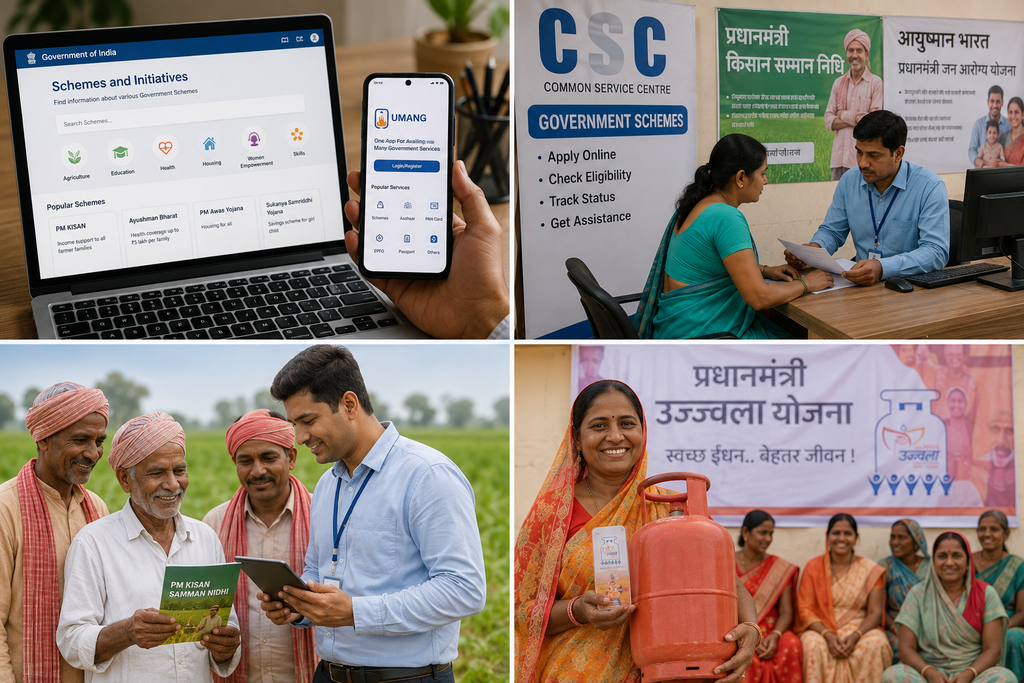
These are launched and funded by the Government of India through different ministries. They are usually available across most states and union territories. Examples include PM-KISAN, Ayushman Bharat, PM Awas Yojana, PM Surya Ghar Muft Bijli Yojana, and Sukanya Samriddhi Yojana.
State Government Schemes
These are introduced by individual state governments according to local needs and priorities. For example, states may run special pension schemes, women welfare programs, farmer support schemes, education scholarships, or employment assistance initiatives.
Understanding whether a scheme is central or state-specific is important because eligibility rules, income limits, and application portals may differ.
Central Government Schemes 2026: Ministry-Wise Overview
The Government of India implements hundreds of schemes through different ministries. Below are the major sectors that receive significant attention in 2026.
Agriculture and Farmer Welfare
Agriculture remains one of the largest focus areas of government spending. Several schemes aim to improve farmer income, irrigation, crop protection, and access to credit.
PM-KISAN (Pradhan Mantri Kisan Samman Nidhi)
Under PM-KISAN, Eligible farmer families receive Rs. 6,000 every year, which is paid in three equal installments directly into their bank accounts.The scheme supports small and marginal farmers and continues to be one of the most widely used income-support programs.
Kisan Credit Card (KCC)
The Kisan Credit Card scheme provides farmers with short-term credit for cultivation, livestock, fisheries, and allied agricultural activities. Interest subsidies are available for timely repayment, making agricultural loans more affordable.
PM Fasal Bima Yojana
This crop insurance scheme protects farmers against losses caused by drought, floods, pests, disease, and other natural disasters. It helps reduce financial risk and encourages agricultural investment.
PM Krishi Sinchayee Yojana
The scheme focuses on improving irrigation infrastructure and promoting efficient water use through micro-irrigation, drip irrigation, and better water management.
Together, these schemes aim to improve productivity, reduce agricultural risk, and increase rural income.
Health and Family Welfare
Healthcare has become a major pillar of India’s welfare framework, especially through digital health infrastructure and insurance coverage.
Ayushman Bharat – PM-JAY
Ayushman Bharat provides health insurance coverage of up to Rs. 5 lakh per eligible family per year for hospitalization at empaneled public and private hospitals.
Ayushman Bharat Health Infrastructure Mission
This initiative strengthens hospitals, laboratories, disease surveillance systems, and digital health infrastructure across the country.
PM Jan Aushadhi Yojana
Jan Aushadhi stores provide affordable generic medicines, helping families reduce healthcare expenses significantly.
These health initiatives improve access to treatment, medicines, and medical infrastructure across urban and rural India.
Housing for All
Affordable housing remains a major national priority.
Pradhan Mantri Awas Yojana (PMAY)
PMAY supports eligible beneficiaries in constructing or purchasing houses through financial assistance and interest subsidies. The scheme benefits urban and rural households that do not own a permanent house.
Housing assistance under PMAY has transformed millions of households by improving sanitation, safety, and living conditions.
Financial Inclusion and Insurance
India’s financial inclusion ecosystem is built around bank accounts, insurance, and pension schemes.
Pradhan Mantri Jan Dhan Yojana
Jan Dhan provides zero-balance bank accounts with access to banking services, direct benefit transfers (DBT), RuPay cards, and other financial facilities.
Pradhan Mantri Jeevan Jyoti Bima Yojana (PMJJBY)
PMJJBY offers low-cost life insurance coverage for eligible account holders through participating banks.
Pradhan Mantri Suraksha Bima Yojana (PMSBY)
PMSBY provides affordable accidental insurance coverage and is widely linked with Jan Dhan accounts.
Atal Pension Yojana (APY)
APY is designed for workers in the unorganized sector and provides a guaranteed pension after the age of 60 based on the subscriber’s contribution.
These schemes improve financial security and help households manage risk through insurance and pensions.
Clean Energy and Rooftop Solar
India’s renewable energy transition has accelerated in recent years.
PM Surya Ghar Muft Bijli Yojana
This flagship rooftop solar scheme provides subsidies for installing residential solar systems. Eligible households can reduce electricity bills and, in many cases, receive free electricity up to specified consumption limits.
The scheme also promotes clean energy adoption, local employment, and household energy independence.
Skill Development, Entrepreneurship, and Traditional Trades
Employment generation and vocational training continue to receive significant policy support.
PM Vishwakarma Yojana
PM Vishwakarma supports traditional artisans and craftspeople such as carpenters, blacksmiths, potters, tailors, and other skilled workers through training, financial assistance, toolkits, and concessional loans.
Skill India Mission
Skill India focuses on vocational training, certification, apprenticeships, and industry-linked skill development for youth.
PM Mudra Yojana
Mudra loans help small businesses, micro-enterprises, and self-employed individuals access collateral-free credit.
These programs encourage entrepreneurship and improve employability across urban and rural areas.
Education and Human Capital
Education schemes support school students, higher education, scholarships, and digital learning.
PM POSHAN (Mid-Day Meal Scheme)
PM POSHAN provides nutritious meals to school children in government and aided schools, improving attendance and nutrition.
National Scholarship Portal (NSP)
The National Scholarship Portal offers scholarships for students from various categories, including SC, ST, OBC, minority communities, economically weaker sections, and merit-based beneficiaries.
PM SHRI Schools
PM SHRI aims to develop model schools with improved infrastructure, technology-enabled classrooms, and quality education standards.
These initiatives strengthen educational access, nutrition, and learning outcomes.
Women and Child Development
Women-focused schemes remain a key component of social welfare policy.
Sukanya Samriddhi Yojana
Parents or guardians can open a Sukanya Samriddhi account for a girl child and build long-term savings for education and marriage through government-backed returns.
Beti Bachao Beti Padhao
This initiative promotes the education, protection, and empowerment of girls through awareness campaigns and institutional support.
PM Matru Vandana Yojana
Eligible pregnant and lactating women receive maternity benefits to support nutrition and healthcare during pregnancy and childbirth.
These schemes encourage financial security, education, and maternal well-being.
Tribal, SC/ST, and Minority Welfare
Several schemes are targeted specifically toward socially and economically disadvantaged communities.
Major initiatives include:
- Scholarships for SC, ST, OBC, and minority students
- Hostels and educational assistance programs
- Skill development and entrepreneurship support
- Livelihood and community development initiatives
- Financial assistance through dedicated development corporations
Governance, Digital, and Infrastructure
India’s governance ecosystem has become increasingly digital.
Digital India
Digital India promotes online government services, digital payments, broadband connectivity, e-governance, and digital literacy.
UMANG Platform
UMANG provides access to hundreds of government services through a single mobile application.
DigiLocker
DigiLocker allows citizens to securely store and access official documents such as Aadhaar, PAN, driving license, educational certificates, and other records digitally.
Digital governance has reduced paperwork and improved transparency in public service delivery.
Labour, Employment, and Social Security
Workers in both organized and unorganized sectors are increasingly covered through social security programs.
e-Shram Portal
The e-Shram portal creates a national database of unorganized workers and helps connect eligible workers with welfare schemes and benefits.
Employees’ State Insurance (ESI)
ESI provides medical care, sickness benefits, maternity benefits, and other social security support to eligible workers.
Employees’ Provident Fund (EPF)
EPF remains one of India’s most important retirement savings and social security mechanisms for salaried employees.
These initiatives strengthen income protection and worker welfare.
Startups, MSMEs, and Industry
The government continues to support manufacturing, innovation, and small businesses.
Startup India
Startup India provides tax incentives, easier compliance, funding support, incubation, and innovation assistance for eligible startups.
MSME Support Programs
MSME schemes offer credit guarantees, technology upgrades, market access support, digital adoption assistance, and export promotion for micro, small, and medium enterprises.
Industrial development schemes help generate employment and encourage domestic production.
State Government Schemes 2026: Flagship Examples
While every state has its own welfare programs, some of the most prominent state-level initiatives in 2026 include:
Uttar Pradesh
- Widow Pension Scheme
- Old Age Pension Scheme
- Scholarship schemes
- Farmer welfare and irrigation support
Madhya Pradesh
- Ladli Behna Yojana
- Mukhyamantri Kisan schemes
- Education assistance programs
Chhattisgarh
- Mahtari Vandana Yojana
- Noni Sashaktikaran Yojana
- Yuva Darshan Yojana
- Tribal welfare initiatives
Maharashtra
- Women empowerment schemes
- Agriculture and irrigation programs
- Skill development initiatives
Tamil Nadu
- Public distribution and nutrition schemes
- Education support programs
- Women welfare and self-help group initiatives
West Bengal
- Lakshmir Bhandar
- Student scholarship schemes
- Health and social assistance programs
State schemes often complement central government schemes and may provide additional financial assistance.
Union Budget 2026-27: The Big Picture
The Union Budget 2026-27 continues to focus on inclusive growth, infrastructure, employment, agriculture, digital governance, and renewable energy.
Major policy priorities include:
- Increased infrastructure investment
- Continued support for PMAY and rural development
- Expansion of renewable energy programs
- Agriculture modernization
- Skill development and employment generation
- Digital public infrastructure
- Social security and welfare delivery through DBT
- Support for MSMEs and manufacturing
The budget strengthens the overall welfare ecosystem while promoting economic growth and job creation.
How to Check Eligibility and Apply: The Common Digital Backbone
Most government schemes in 2026 are connected through a common digital infrastructure that simplifies applications and payments.
Citizens can typically check eligibility through:
- Official ministry websites
- State government portals
- UMANG mobile app
- Common Service Centres (CSCs)
- District administration offices
- Panchayat and municipal offices
Direct Benefit Transfer (DBT), Aadhaar authentication, Jan Dhan bank accounts, DigiLocker documents, and mobile OTP verification are increasingly integrated into the application process.
What Documents Are Generally Required to Apply for Government Schemes?
Although requirements vary by scheme, the following documents are commonly needed:
- Aadhaar Card
- PAN Card (where applicable)
- Residence/Domicile Certificate
- Income Certificate
- Caste Certificate (if applicable)
- Bank Account Passbook
- Passport-size Photograph
- Mobile Number linked with Aadhaar
- Ration Card
- Land Records (for agricultural schemes)
- Birth Certificate (for child-related schemes)
- Educational Certificates (for scholarship schemes)
- Senior Citizen Pension Schemes 2026: Best Retirement Plans for Financial Security
- Ladli Behna Yojana 2026: New Form Date, Online Registration, Eligibility, Documents, KYC, Third Phase & Payment Updates
The Most Popular Government Schemes in India for 2026
The following schemes are among the most widely used and searched government schemes in India during 2026:
- PM-KISAN
- Ayushman Bharat PM-JAY
- PM Awas Yojana
- PM Surya Ghar Muft Bijli Yojana
- Sukanya Samriddhi Yojana
- Atal Pension Yojana
- PM Vishwakarma Yojana
- Kisan Credit Card
- PM Mudra Yojana
- Jan Dhan Yojana
- PMJJBY
- PMSBY
- PM Fasal Bima Yojana
- State pension schemes
- Women empowerment schemes such as Ladli Behna and Lakshmir Bhandar
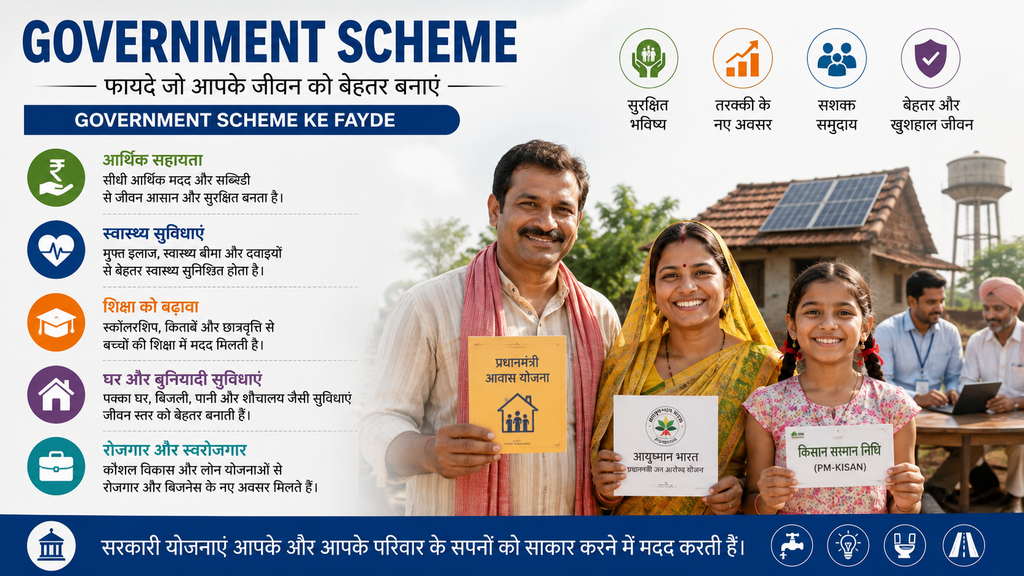
These programs continue to receive strong public participation because they provide direct financial support, healthcare, housing, insurance, pensions, education benefits, and employment opportunities.
Frequently Asked Questions (FAQs)
1. What are the main government schemes available in India in 2026?
India has many Central and State Government schemes for different groups, including farmers, students, women, workers, senior citizens, entrepreneurs, and low-income families. Popular schemes include PM-KISAN, Ayushman Bharat, PM Awas Yojana, PM Surya Ghar, Sukanya Samriddhi Yojana, and various state-level welfare schemes.
2. How can I check if I am eligible for a government scheme?
Eligibility depends on the specific scheme. You can check the official website of the concerned government department or ministry for details about age, income, residence, occupation, and other requirements. Always review the latest official guidelines before applying.
3. Can I apply for government schemes online?
Yes, many government schemes now allow online applications through official portals, state government websites, UMANG, or Common Service Centres (CSCs). Some schemes may also offer offline application facilities through government offices or local authorities.
4. What documents are usually required to apply for a government scheme?
The required documents may vary from one scheme to another. However, common documents can include an Aadhaar Card, bank account details, mobile number, income certificate, residence certificate, ration card, and other documents depending on the type of benefit being offered.
Final Thoughts
Government Schemes 2026 reflect India’s broader goal of inclusive development and digital governance. Whether you are a farmer looking for crop support, a woman seeking financial assistance, a student applying for scholarships, a worker planning retirement, or a family searching for housing or healthcare benefits, there is likely a scheme designed for your needs.
The biggest change in recent years has been the integration of Aadhaar, DBT, Jan Dhan, DigiLocker, and online government portals, which has made welfare delivery faster and more transparent. Before applying, always verify the latest eligibility criteria and application process on the official government website of the concerned ministry or state department.
By understanding both Central Government Schemes and State Government Schemes, citizens can maximize the benefits available to them and make informed decisions about education, healthcare, housing, agriculture, employment, and long-term financial security in 2026.

2 Comments