

Senior Citizen Pension Schemes 2026: Retirement should be a time of peace, dignity, and financial independence. However, many elderly people worry about how they will manage daily expenses, medical bills, and rising living costs after they stop working. This is where senior citizen pension schemes India 2026 become extremely important. These government-backed retirement plans are designed to provide a steady source of income and financial support during old age.
In India, several pension and savings schemes are available for retirees and senior citizens. Some are meant for salaried employees, some for self-employed individuals, and others for economically weaker sections of society. Choosing the right combination of these schemes can help build a secure retirement income and reduce dependence on family members.
Overview Table: Senior Citizen Pension Schemes India 2026
| Scheme | Eligible Age | Monthly/Regular Income | Government Backed |
|---|---|---|---|
| Senior Citizens’ Savings Scheme (SCSS) | 60+ years | Quarterly interest income | Yes |
| Pradhan Mantri Vaya Vandana Yojana (PMVVY) | 60+ years | Monthly/quarterly pension | Yes |
| National Pension System (NPS) | 18–70 years | Pension after retirement | Yes |
| Atal Pension Yojana (APY) | 18–40 years | Guaranteed pension after 60 | Yes |
| Employees’ Pension Scheme (EPS) | Eligible EPF members | Monthly pension | Yes |
| Indira Gandhi National Old Age Pension Scheme (IGNOAPS) | 60+ years | Monthly financial assistance | Yes |
| State-Level Old Age Pension Schemes | Varies by state | Monthly pension support | Yes |
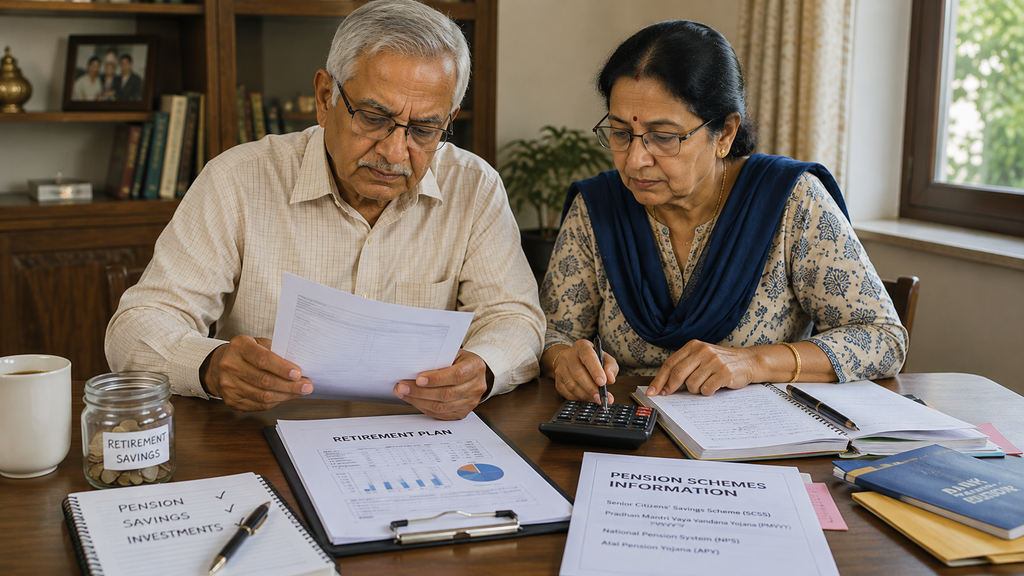
Government Pension Schemes: The Backbone of Retirement Security
Government pension schemes are considered one of the safest retirement options because they are supported by the Government of India. These schemes provide regular income, capital protection, and long-term financial stability.
For senior citizens, government-backed plans are often preferred because they involve lower risk compared to market-linked investments.
Senior Citizens’ Savings Scheme (SCSS)
The Senior Citizens’ Savings Scheme (SCSS) is one of the most popular retirement savings options in India. It is specially designed for people aged 60 years and above and is available through post offices and authorized banks.
Key Features
- Available to individuals aged 60 years or above
- Five-year maturity period
- Can be extended for an additional three years
- Quarterly interest payout
- Government-backed investment
- Tax benefits under Section 80C (subject to applicable limits)
Pradhan Mantri Vaya Vandana Yojana (PMVVY)
The Pradhan Mantri Vaya Vandana Yojana (PMVVY) is another government-supported retirement income scheme aimed at senior citizens.
Why It Is Popular
- Available for individuals aged 60 years and above
- Provides assured pension payments
- Pension can be received monthly, quarterly, half-yearly, or yearly
- Offers guaranteed returns for a fixed period
- Backed by the Government of India through LIC
PMVVY is particularly useful for retirees who prefer a predictable and fixed pension income without exposure to stock market fluctuations.
National Pension System (NPS)
The National Pension System (NPS) is a long-term retirement investment scheme regulated by the Pension Fund Regulatory and Development Authority (PFRDA).
Important Benefits
- Open to Indian citizens aged 18–70 years
- Your contributions are invested across different types of assets, including government securities, corporate bonds, and equity, to help build long-term retirement savings.
- Builds a retirement corpus over time
- Part of the accumulated amount can be withdrawn at retirement
- The remaining amount is used to purchase an annuity that provides pension income
Atal Pension Yojana (APY)
Although Atal Pension Yojana (APY) is not specifically meant for current senior citizens, it remains one of the most important pension schemes for future retirees.
Highlights
- Entry age: 18–40 years
- Guaranteed pension after the age of 60
- Pension options generally range from ₹1,000 to ₹5,000 per month
- Contributions depend on the age of joining and chosen pension amount
- Government-backed guarantee
Employees’ Pension Scheme (EPS)
The Employees’ Pension Scheme (EPS) is available to eligible employees who are members of the Employees’ Provident Fund (EPF).
Main Features
- Monthly pension after retirement
- Applicable to eligible salaried employees
- Pension amount depends on salary history and years of service
- Family pension benefits may also be available
Indira Gandhi National Old Age Pension Scheme (IGNOAPS)
The Indira Gandhi National Old Age Pension Scheme (IGNOAPS) is intended for elderly individuals belonging to economically weaker sections.
Eligibility and Benefits
- Generally available to senior citizens aged 60 years and above
- Financial assistance is provided through central and state governments
- Pension amount varies depending on age and state contribution
- Aimed at providing basic income support to vulnerable elderly citizens

State-Level Old Age Pension Schemes
Apart from central government programs, almost every Indian state operates its own old-age pension scheme.
Examples include pension schemes in states such as:
- Uttar Pradesh
- Madhya Pradesh
- Rajasthan
- Maharashtra
- Tamil Nadu
- Karnataka
- West Bengal
- Gujarat
Common Features
- Monthly pension assistance
- Income or poverty-related eligibility criteria
- Age requirements generally start from 60 years
- Online application facilities available in many states
Healthcare Coverage Alongside Income Support
Retirement planning should not focus only on pension income. Medical expenses often increase significantly with age.
Senior citizens should also consider healthcare support programs such as:
- Ayushman Bharat Pradhan Mantri Jan Arogya Yojana (PM-JAY) for eligible families
- State government health insurance schemes
- Senior citizen health insurance policies
- CGHS and other government medical facilities for eligible retirees
The Proposed Senior Citizens New Scheme 2026
Discussions around a possible Senior Citizens New Scheme 2026 have generated interest among retirees. While governments periodically announce improvements in pension, healthcare, and social security programs, individuals should rely only on official government notifications before making financial decisions.
Possible areas of future policy support may include:
- Higher pension amounts
- Better healthcare benefits
- Simplified digital application processes
- Improved support for elderly citizens living alone
- Enhanced financial inclusion programs
How to Choose the Right Combination of Schemes
The best retirement strategy is usually not a single scheme, but a combination of multiple pension and savings options.
For Retired Salaried Employees
- Employees’ Pension Scheme (EPS)
- Senior Citizens’ Savings Scheme (SCSS)
- National Pension System (if already invested)
For Self-Employed Individuals
- SCSS
- PMVVY
- NPS (if accumulated before retirement)
For Low-Income Senior Citizens
- IGNOAPS
- State-level old-age pension scheme
- Ayushman Bharat or applicable state health scheme
For Younger Workers Planning Retirement
- Atal Pension Yojana
- National Pension System
- EPF/EPS (if salaried)
- PM YASASVI Scholarship 2026: Apply Online, Eligibility, Last Date, Scholarship Amount & Status Check
- PM Har Ghar Jal Yojana 2026: Jal Jeevan Mission Online Apply, List, Status and Latest Updates
Practical Steps for Applying for Senior Citizen Pension Schemes
The application process is generally straightforward.
Step 1: Check Eligibility
Verify age, income, employment history, and other scheme-specific conditions.
Step 2: Gather Documents
Commonly required documents include:
- Aadhaar card
- PAN card
- Age proof
- Address proof
- Passport-size photographs
- Bank account details
- Pension or retirement documents (where applicable)
Step 3: Visit the Appropriate Institution
Applications can usually be submitted through:
- Post offices
- Nationalized banks
- LIC branches
- EPFO offices
- State social welfare departments
- Official online government portals
Step 4: Complete Verification
Authorities may verify documents and eligibility before approving the pension.
Step 5: Receive Pension
Approved benefits are generally transferred directly to the applicant’s bank account.
Tax Considerations for Retirees
Retirees should also understand the tax treatment of pension income.
Some important points include:
- Whether your pension is taxable depends on your total annual income and the tax rules that apply in the financial year.
- SCSS investments qualify for tax benefits under Section 80C (subject to applicable limits).
- Interest earned from SCSS may be taxable.
- NPS offers certain tax advantages during the contribution phase and partial withdrawal stage.
- Tax rules can change, so retirees should review the latest provisions each financial year.
Final Thoughts
The Senior Citizen Pension Schemes 2026 provide several reliable options for building financial security after retirement. Whether you are a retired government employee, private-sector worker, self-employed individual, or a senior citizen from a low-income household, there is likely a suitable government-backed scheme available for you.
For most retirees, a combination of Senior Citizens’ Savings Scheme (SCSS), Pradhan Mantri Vaya Vandana Yojana (PMVVY), Employees’ Pension Scheme (EPS), and applicable state-level pension schemes offers a balanced mix of safety, regular income, and long-term financial stability.
The key to a comfortable retirement is planning early, choosing the right combination of schemes, maintaining healthcare coverage, and reviewing your financial needs regularly. By using the pension and savings options available in India, senior citizens can enjoy greater independence, dignity, and peace of mind during their retirement years.
Frequently Asked Questions (FAQs)
Which is the best pension scheme for senior citizens in India in 2026?
The Senior Citizens’ Savings Scheme (SCSS) is widely considered one of the best options because it offers government-backed safety and regular quarterly income
Can a retired person invest in both SCSS and PMVVY?
Yes. Eligible senior citizens can generally invest in both schemes, subject to the investment limits and rules applicable to each scheme.
Is the National Pension System suitable for retirees?
NPS is primarily designed for long-term retirement planning, but individuals who have accumulated funds in NPS before retirement can receive pension income through annuity options.
Are state-level old age pension schemes available in every state?
Yes. Most Indian states operate their own old-age pension schemes with different eligibility criteria and pension amounts.
Is pension income taxable in India?
Pension income may be taxable depending on the retiree’s total annual income and the prevailing tax rules.


One Comment