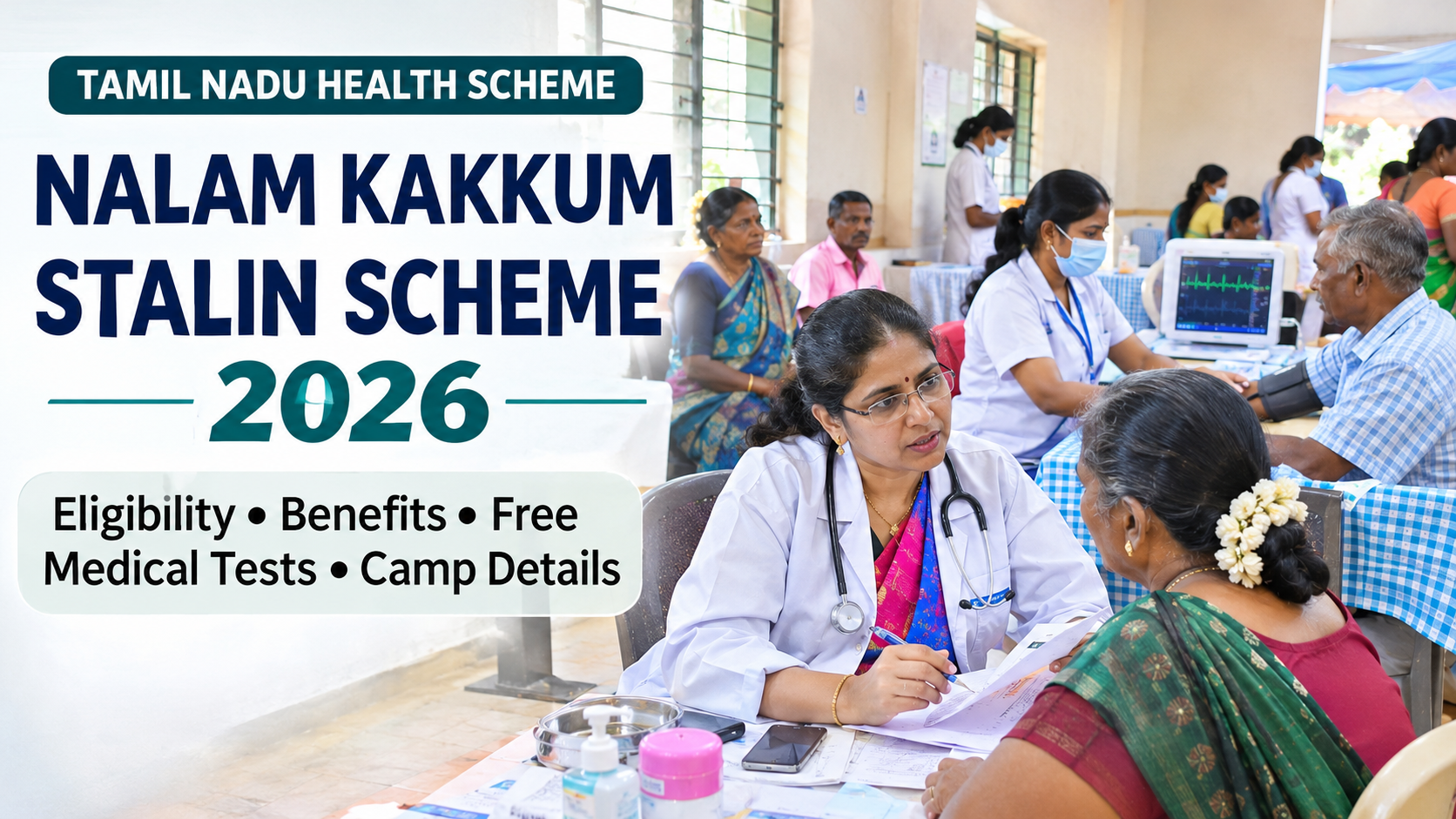
Nalam Kakkum Stalin Scheme 2026 : “Nalam Kakkum Stalin” (meaning “Stalin who protects health”) The Nalam Kakkum Stalin Scheme is a Tamil Nadu Government healthcare initiative designed to bring specialised medical consultations, diagnostic tests and preventive healthcare services closer to the public. Launched on 2 August 2025, the programme organised special medical camps across Tamil Nadu, with particular attention to people who may face difficulties accessing specialist healthcare.
One important distinction for applicants and readers is that this is a public healthcare and medical-screening initiative, not a monthly financial assistance scheme. Its benefits are centred on early disease detection, medical consultation, diagnostic services and referrals for further treatment.
According to a report published on 28 February 2026, Tamil Nadu Health Minister Ma. Subramanian announced that 1,256 camps had been conducted and approximately 18.52 lakh people had benefited. The statewide campaign was reported as completed at that point
Access to specialised healthcare remains an important public policy concern, particularly for people living in rural areas, economically weaker households and communities with limited access to advanced diagnostic facilities. While primary healthcare centres provide essential medical services, patients sometimes need specialist consultations and investigations that may not be readily available close to their homes.
What Is the Nalam Kakkum Stalin Scheme?
The Nalam Kakkum Stalin Scheme is a Tamil Nadu Government public healthcare initiative that provides multi-specialty medical consultations, diagnostic investigations and preventive health screening through organised medical camps.The programme was introduced by Chief Minister M.K. Stalin on 2 August 2025 through the Department of Health and Family Welfare. Its central objective was to make specialist healthcare services accessible to people without requiring them to travel long distances to larger hospitals for preliminary examinations.
The programme included medical professionals from different specialities, laboratory investigations and selected advanced diagnostic facilities. People attending the camps could undergo examinations and receive medical advice based on their health conditions.
Another important feature was the provision of health records containing examination results. These records could help patients communicate their medical history when seeking further treatment.The programme was particularly relevant for rural communities, people with chronic diseases, pregnant women, senior citizens and persons with disabilities.
Key Highlights of Nalam Kakkum Stalin Scheme 2026
The following table summarises the major features of the programme.
| Particulars | Details |
|---|---|
| Scheme Name | Nalam Kakkum Stalin Scheme |
| State | Tamil Nadu |
| Launched On | 2 August 2025 |
| Launched By | Chief Minister M.K. Stalin |
| Implementing Department | Department of Health and Family Welfare |
| Main Objective | Accessible multi-specialty healthcare and early disease detection |
| Planned Medical Camps | 1,256 |
| Medical Specialities | 17 |
| Beneficiaries Reported | Approximately 18.52 lakh |
| Completion Announcement | 28 February 2026 |
| Consultation Charges | Free at the scheme’s medical camps |
| Additional Services | Health insurance enrolment assistance and disability certification |
| Financial Assistance | No direct cash benefit |
| Official Sources | tn.gov.in & district websites |
The figures concerning beneficiaries and completed camps were reported by the Tamil Nadu Health Minister in February 2026.
Objectives of the Nalam Kakkum Stalin Scheme
The programme was developed around the idea that early diagnosis and timely medical intervention can reduce the complications associated with untreated illnesses.
Its objectives extended beyond providing one-time medical consultations.
Improving access to specialist doctors: Residents of areas with limited specialist healthcare facilities were given opportunities to consult doctors from multiple medical departments at nearby camps.
Early identification of diseases: Screening for diabetes, hypertension, tuberculosis and certain cancers was included to help identify health concerns before they become more complicated.
Reducing barriers to diagnostic services: The camps provided access to laboratory investigations and diagnostic facilities that might otherwise require separate hospital visits.
Supporting vulnerable communities: Priority was given to people who may face greater healthcare access difficulties, including economically weaker households, pregnant women, persons with disabilities and tribal communities.
Connecting patients with further treatment: People requiring additional investigation or specialised care could be referred to appropriate higher-level healthcare facilities.
These objectives reflect the programme’s emphasis on preventive healthcare rather than limiting public health services to treatment after an illness becomes serious.
4. Nalam Kakkum Stalin Scheme Eligibility Criteria
One of the most frequently searched questions concerns eligibility for the scheme. It is important to understand that this programme was organised as a public medical-camp initiative rather than a conventional targeted financial assistance scheme.
There is no verified universal income ceiling, application-based beneficiary quota or mandatory age threshold established in the available programme information.
The camps were intended to serve the public, while certain groups received particular attention during the implementation.
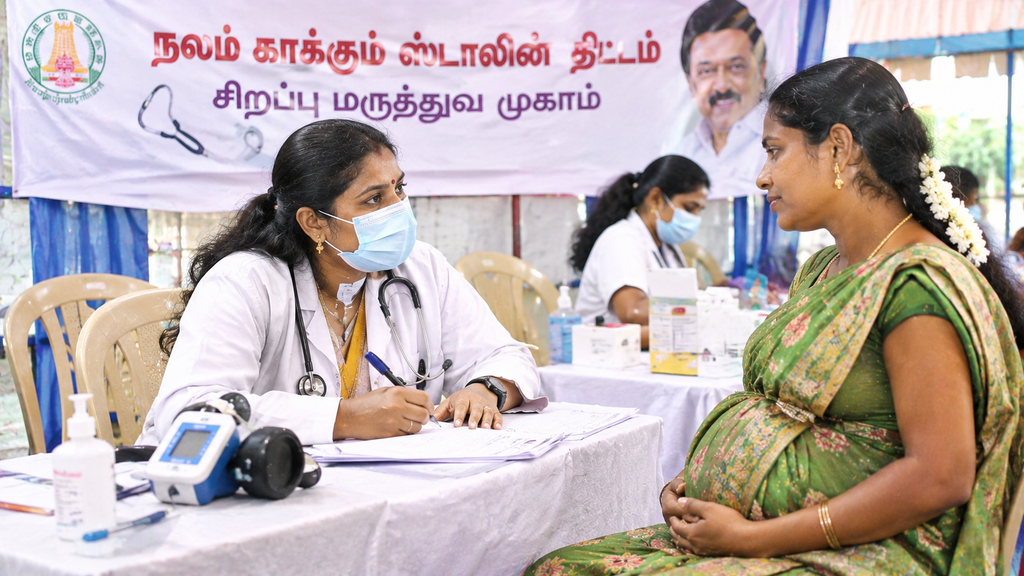
Priority Beneficiary Groups
People above 40 years of age: Older adults were among the priority groups because regular screening can help identify conditions such as diabetes, hypertension and cardiovascular problems.
People with diabetes and hypertension: Individuals living with these conditions could benefit from medical consultations and relevant investigations.
Heart patients: People with existing cardiac conditions were among the groups prioritised for medical attention.
Pregnant and lactating women: The programme included women requiring maternal health advice and related support.
Persons with disabilities: Special arrangements included assistance with disability certification through the relevant government services.
Tribal communities: Camps were planned with attention to communities living in areas where access to specialist healthcare may be limited.
Economically weaker households: The programme sought to improve access to specialist consultations and diagnostic services without charging for the camp-based services.
Children requiring special attention: Children’s health and nutritional concerns were also included in the programme’s broader public health priorities.
These are priority categories, not separate cash-benefit eligibility conditions. The actual services available depend on the medical facilities and arrangements at the individual camp.
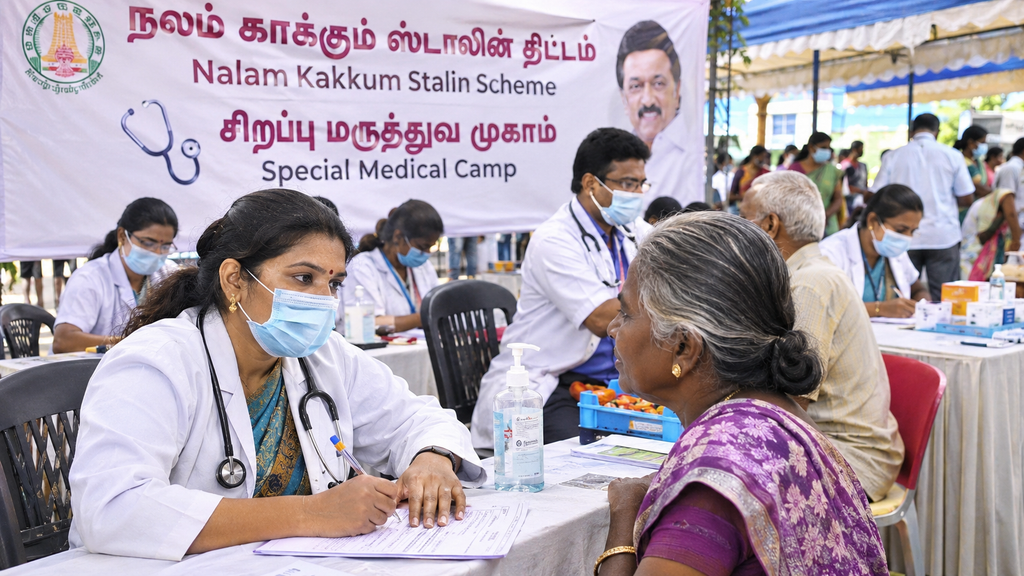
Benefits of Nalam Kakkum Stalin Scheme
The main benefit of the initiative was the availability of multiple healthcare services at one location. Instead of visiting different specialists and diagnostic centres separately for initial examinations, residents could access several services during a medical camp.
Free Multi-Specialty Medical Consultations
The camps brought together doctors from different medical departments. Patients could discuss their health concerns, receive preliminary assessments and obtain specialist advice.
The availability of multiple specialities was particularly useful for people with more than one health condition.
Free Diagnostic and Laboratory Tests
The programme included basic and advanced diagnostic investigations. These services were intended to help doctors identify potential health problems and decide whether additional medical attention was necessary.
Early Disease Detection
Screening for non-communicable diseases and selected infectious diseases formed an important part of the programme.
Early identification can help patients seek appropriate treatment before certain conditions become more difficult to manage.
Personal Health Records
Medical examination results were provided to beneficiaries in health-record files. Maintaining these records can help patients communicate their previous test results and medical history during subsequent hospital consultations.
Assistance with Government Health Insurance
The camps also facilitated registration under the Chief Minister’s Comprehensive Health Insurance Scheme (CMCHIS), subject to the applicable programme requirements.
This was an additional service, not an automatic insurance approval for every camp visitor.
Disability Certification
Eligible persons with disabilities could receive assistance with government-recognised disability certification through the relevant assessment and administrative process.
Support for Unorganised Workers
The Labour Department also provided services connected with Labour Welfare Board identity cards for eligible unorganised-sector workers.
These additional facilities made the camps more than ordinary health-check-up events. They brought together medical screening and selected government welfare services.
Medical Services Available Under the Scheme
The Nalam Kakkum Stalin programme included 17 medical specialities. These covered general healthcare as well as specialist departments.
The following table explains the services.
| Medical Department | Main Service |
|---|---|
| General Medicine | General health examinations and medical advice |
| General Surgery | Assessment of surgical conditions |
| Orthopaedics | Bone, joint and musculoskeletal consultations |
| Obstetrics and Gynaecology | Women’s and maternal healthcare |
| Paediatrics | Medical consultations for children |
| Cardiology | Heart-related examinations |
| Neurology | Nervous system-related consultations |
| Dermatology | Skin-related medical advice |
| Dental | Oral and dental examinations |
| Ophthalmology | Eye examinations |
| ENT | Ear, nose and throat consultations |
| Psychiatry | Mental healthcare consultations |
| Physiotherapy | Physical rehabilitation advice |
| Radiology | Diagnostic imaging services |
| Pulmonology | Respiratory and lung-related consultations |
| Diabetology | Diabetes screening and management advice |
| AYUSH | Traditional systems of medicine and related advice |
The Department of Public Health and Preventive Medicine, Erode, lists these 17 specialities in its description of the initiative.
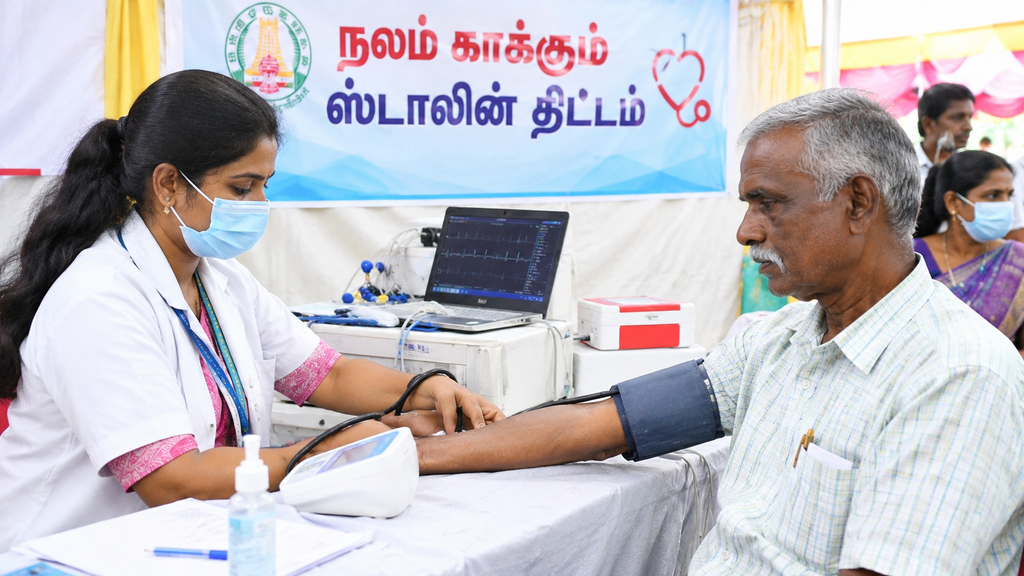
Which Medical Tests Are Available?
Medical investigations were an important component of the programme because consultations alone may not be sufficient to identify certain health conditions.
The available facilities included:
Blood investigations: Blood samples were collected for relevant laboratory tests, including blood sugar and other health indicators.
Blood pressure examination: Blood pressure screening helped identify people who might require further evaluation for hypertension.
ECG: Electrocardiography was available to assess the electrical activity of the heart.
ECHO: Echocardiography was among the advanced diagnostic facilities provided at participating camps.
X-ray: X-ray investigations were available for relevant medical assessments.
Ultrasound and scanning: Imaging services were included, depending on the facilities available at the camp.
Cancer screening: Early detection examinations for selected cancers, including breast and oral cancer, were part of the programme.
Tuberculosis and leprosy screening: Screening services were included to identify suspected cases requiring further medical assessment.
Not every visitor necessarily received every test. The doctor determined the appropriate investigations based on the patient’s medical needs and the facilities available at the camp.
How to Register for the Nalam Kakkum Stalin Scheme?
The programme was implemented through physical medical camps rather than a conventional online application system for receiving money or monthly benefits.
People attended the designated camp location and registered for medical services.
The general process was as follows:
- Check the announcement of a designated medical camp in your district.
- Confirm its location, date and operating hours through the relevant district health authorities.
- Visit the camp during its announced operating hours.
- Complete the registration process at the designated counter.
- Explain your health concerns to the medical staff.
- Consult the relevant doctor and undergo recommended examinations.
- Collect available medical reports and retain your health records.
- Follow the doctor’s advice if additional investigation or hospital treatment is recommended.
Documents Required for the Medical Camp
The available programme information does not establish one compulsory document checklist for every visitor.
However, carrying relevant identification and medical records can make registration and consultation easier.
| Document | Why It May Be Useful |
|---|---|
| Aadhaar Card or another identity document | Identification, where required |
| Previous medical reports | Helps doctors understand medical history |
| Existing prescriptions | Supports continuity of treatment |
| Previous diagnostic reports | Helps compare examination results |
| Disability certificate, if available | Relevant to disability-related services |
| CMCHIS-related documents, if applicable | Useful for insurance enrolment assistance |
| Labour-related documents, if applicable | Relevant to worker welfare services |
Visitors should confirm any specific document requirements with the organising health department before attending a particular camp.
Nalam Kakkum Stalin Scheme 2026: Latest Update
The implementation figures provide a clearer picture of the programme’s progress.On 2 August 2025, Chief Minister M.K. Stalin inaugurated the initiative with a plan to organise 1,256 special medical camps across Tamil Nadu.
By December 2025, the programme had reportedly conducted 632 camps and benefited approximately 9.86 lakh people, according to a review meeting reported by DT Next on 2 December 2025.
The programme subsequently reached its planned statewide total.On 28 February 2026, Health Minister Ma. Subramanian announced that 1,256 camps had been conducted and 18.52 lakh people had benefited. The statewide campaign was reported as completed that day.
| Date | Development |
|---|---|
| 2 August 2025 | Statewide initiative inaugurated |
| December 2025 | 632 camps reported completed |
| December 2025 | Approximately 9.86 lakh beneficiaries reported |
| 28 February 2026 | 1,256 camps reported completed |
| 28 February 2026 | Approximately 18.52 lakh beneficiaries reported |
What Happens After a Medical Examination?
A medical camp is an initial point of assessment. It does not necessarily replace a complete hospital-based diagnosis or long-term treatment.If a doctor identifies a possible health problem, the patient may be advised to undergo further investigation or visit an appropriate government hospital.
For example, someone whose screening results indicate a possible cardiac problem may need additional tests and a specialist consultation. Similarly, a person with an abnormal blood sugar result may require further assessment and medical guidance.Patients should retain their examination reports and follow the recommendations provided by the medical team.
The effectiveness of a screening programme depends not only on how many people attend but also on whether those requiring further care can access it.This makes referral arrangements and follow-up an important part of public healthcare delivery.
Also Read:
- TVK Marriage Scheme 2026: 8 Gram Gold Coin, Silk Saree, Eligibility and Online Apply
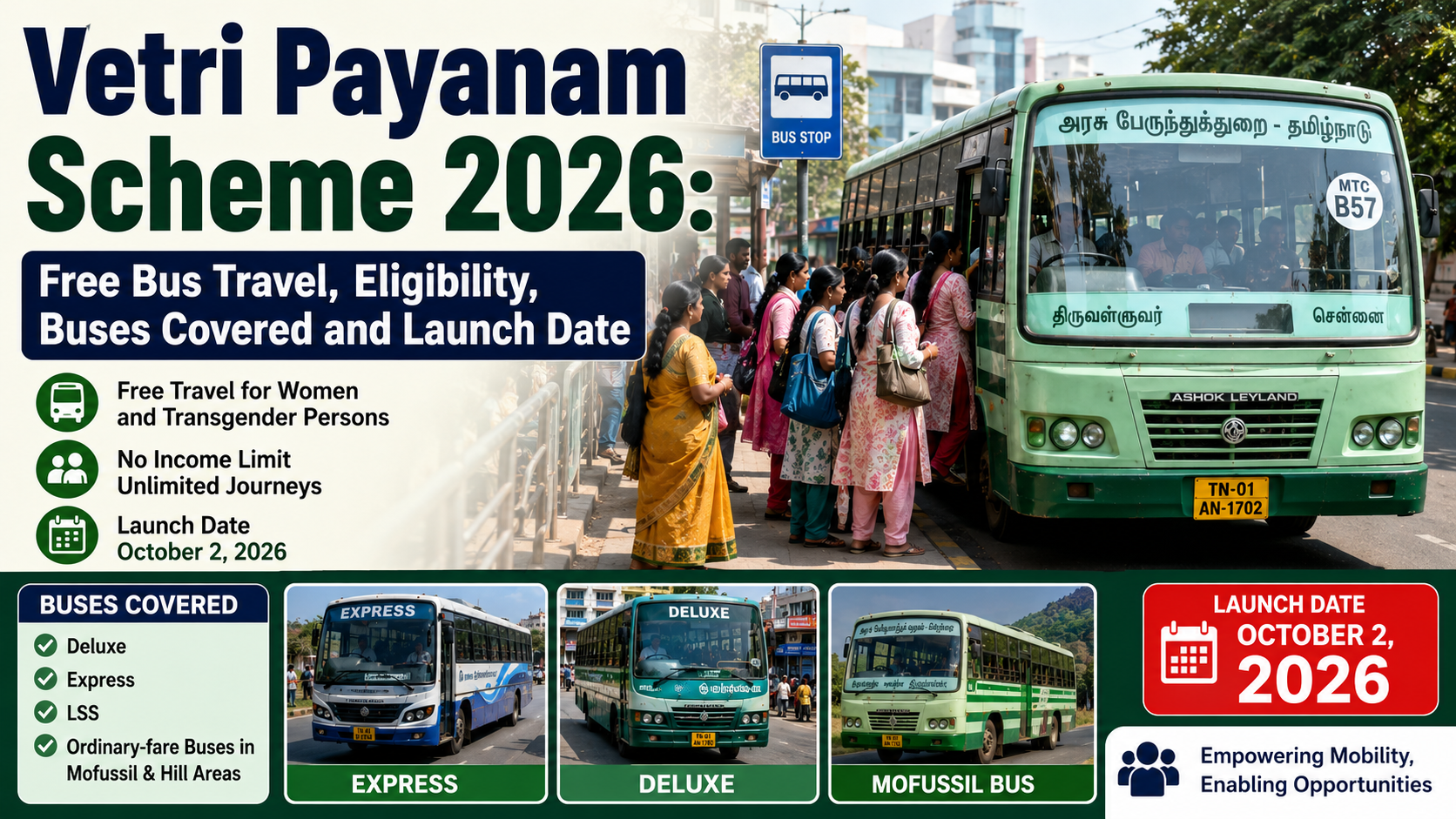
- Vetri Payanam Scheme 2026: Free Bus Travel, Eligibility, Buses Covered and Launch Date
Nalam Kakkum Stalin Scheme vs Makkalai Thedi Maruthuvam
Both initiatives are associated with improving healthcare access in Tamil Nadu, but they have different approaches.
| Feature | Nalam Kakkum Stalin | Makkalai Thedi Maruthuvam |
|---|---|---|
| Main Approach | Special multi-specialty medical camps | Healthcare delivered closer to people’s homes |
| Primary Focus | Screening and specialist consultations | Continued access to selected essential healthcare services |
| Service Model | Organised camp-based examinations | Community and home-based outreach |
| Specialist Consultations | Multiple specialities at designated camps | Services according to the programme’s scope |
| Main Objective | Early detection and medical assessment | Improving access and continuity of healthcare |
The distinction matters because attending a screening camp and receiving continuing medical care are not the same thing. People who need ongoing treatment should follow the appropriate healthcare pathway.
Competitive Advantage: What Readers Should Know Before Visiting a Camp
One frequently overlooked aspect of government health initiatives is the difference between screening, diagnosis and treatment.
A screening test identifies a possible health concern. A diagnostic assessment establishes the nature of that concern. Treatment may require additional consultations, medicines, procedures or hospital admission.
The Nalam Kakkum Stalin programme helped bring the first two stages of healthcare closer to residents, but the availability of every subsequent treatment cannot be assumed.
There are three practical considerations.
First, retain all medical reports. Previous examination results can help doctors understand changes in a person’s health over time.
Second, do not ignore referrals. If the medical team recommends further investigation, attend the appropriate hospital rather than treating a screening result as a final diagnosis.
Third, verify local announcements. The completion of the original 1,256-camp campaign does not establish that a particular district has another camp scheduled. Residents should confirm new dates with local health authorities.
This distinction helps prevent confusion between a completed campaign, continuing routine government healthcare services and newly announced local medical events.
In Conclusion
The Nalam Kakkum Stalin Scheme represents an approach to public healthcare in which specialist consultations and diagnostic facilities are brought closer to communities that may otherwise struggle to access them.
Its reported reach of 18.52 lakh beneficiaries across 1,256 medical camps demonstrates the scale of the original statewide initiative. However, the long-term value of such programmes depends on what happens after screening: timely referrals, access to appropriate treatment, reliable medical records and continuity of care.
For Tamil Nadu residents, the most important point is to distinguish the completed statewide campaign from any new local medical camp announcements. Government healthcare services should be assessed not only by the number of people examined but also by whether patients requiring further care can receive it.
Frequently Asked Questions (FAQs)
What is the Nalam Kakkum Stalin Scheme?
The Nalam Kakkum Stalin Scheme is a Tamil Nadu Government healthcare initiative launched on 2 August 2025.
Who is eligible for the Nalam Kakkum Stalin Scheme?
The programme was designed to provide medical services to the general public. Priority attention was given to people above 40 years, individuals with diabetes and hypertension, heart patients, pregnant women, persons with disabilities, tribal communities and economically weaker households
Are medical tests free under the Nalam Kakkum Stalin Scheme?
Yes. The medical consultations and diagnostic services provided through the scheme’s camps were offered free of charge. Facilities included blood investigations, ECG, ECHO, X-rays, scanning and selected disease-screening services. The exact investigations depended on the medical requirements of the visitor and the facilities available at the camp.
How many people benefited from the Nalam Kakkum Stalin Scheme?
According to the Tamil Nadu Health Minister’s announcement on 28 February 2026, approximately 18.52 lakh people benefited from 1,256 special medical camps conducted across the state.
Is there an online application facility for Nalam Kakkum Stalin Scheme?
The initiative operated through physical medical camps rather than an online application process for cash assistance. People attended designated camps and registered for available healthcare services. There is no verified universal online application form for receiving a financial benefit under this programme.
What documents are required for Nalam Kakkum Stalin medical camps?
There was no verified universal document checklist applicable to every visitor. Carrying an identity document, previous medical reports and prescriptions can help during registration and consultation.