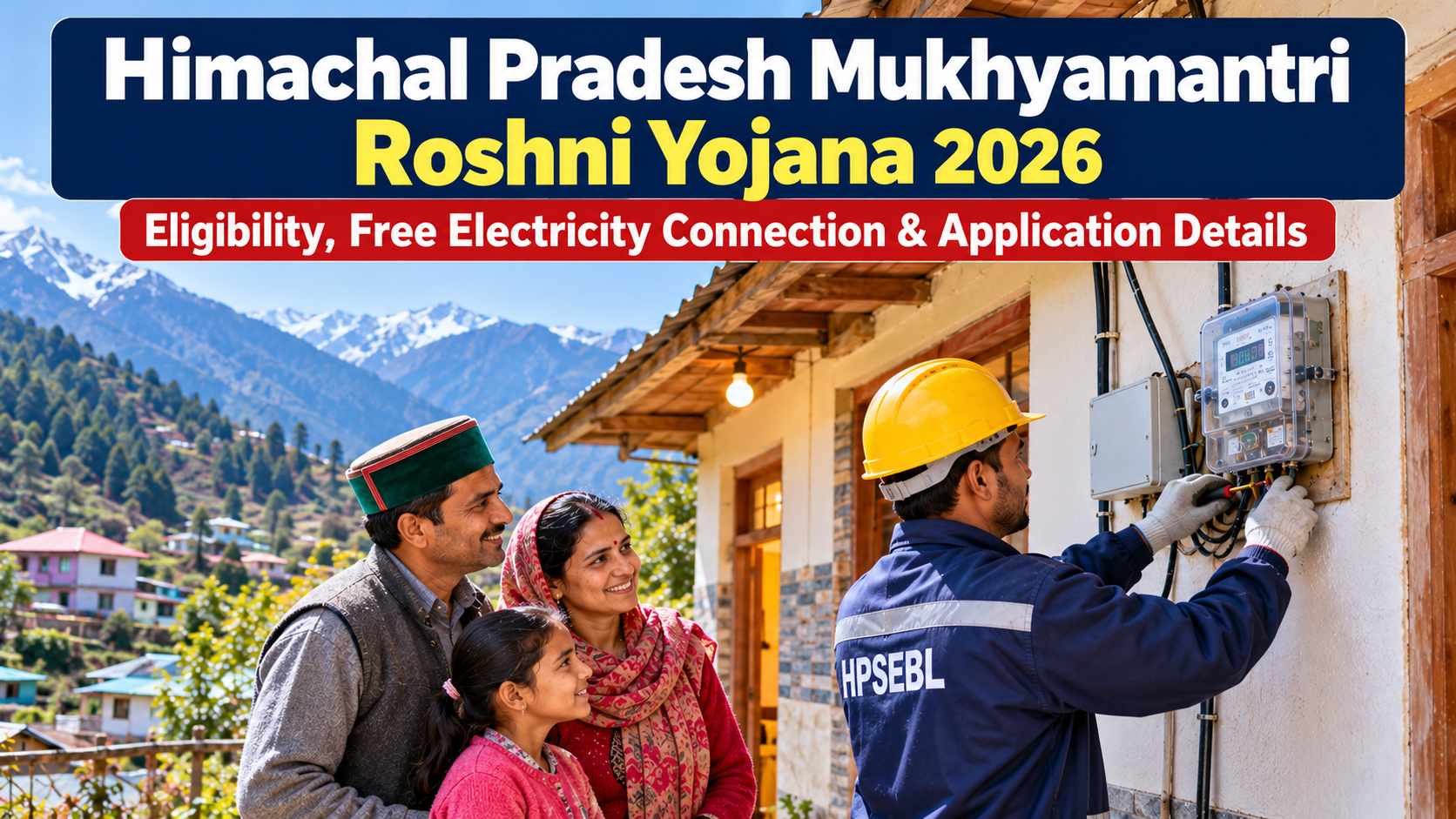
Himachal Pradesh Mukhyamantri Roshni Yojana 2026: Electricity access is often treated as a basic household service, but the initial cost of obtaining a connection can still matter for families with limited income. Himachal Pradesh introduced the Mukhyamantri Roshni Yojana to support poor households that remained without domestic electricity connections.
The scheme was announced in the 2019-20 Budget with a target of providing 17,550 electricity connections to poor families. The state’s Economic Survey later recorded that 4,898 families had benefited during 2019-20 and another 2,703 eligible families had benefited up to November 30, 2020.
What Is Mukhyamantri Roshni Yojana?
Mukhyamantri Roshni Yojana is a Himachal Pradesh government initiative aimed at helping poor households obtain free electricity connections.
The scheme was announced as part of the state’s 2019-20 Budget. The government subsequently tasked the electricity utility with implementing the programme for eligible households. The 2020-21 Economic Survey identifies the scheme as a programme for releasing 17,550 electricity connections to poor families.
The basic policy idea was straightforward: households that satisfied specified poverty or income-related conditions could receive a domestic electricity connection without having to bear the normal connection cost.
The scheme is therefore different from a programme that simply reduces monthly electricity bills. Its principal purpose was access to a new electricity connection for eligible households.
| Detail | Information |
|---|---|
| Scheme Name | Mukhyamantri Roshni Yojana |
| State | Himachal Pradesh |
| Announced In | Budget 2019-20 |
| Beneficiaries | BPL and poor families without electricity connection |
| Benefit | Free electricity connection with 50% rebate in Advance Consumption Deposit |
| Implementing Agency | Himachal Pradesh State Electricity Board Limited (HPSEBL) |
| Application Mode | Offline at the concerned electricity office, subject to applicable process |
| Official Website | HPSEBL Official Website |
When Was the Scheme Announced?
The scheme was announced in the 2019-20 Himachal Pradesh Budget.Contemporary reporting on the Budget stated that no connection charges would be payable by poor householders applying for a new power connection under the Mukhya Mantri Roshni Yojana.
The subsequent implementation framework was associated with the Himachal Pradesh State Electricity Board/HPSEBL.The state’s Economic Survey for 2020-21 provides stronger official confirmation of the programme’s implementation. It records the original target of 17,550 electricity connections and gives the number of families benefiting during the initial implementation period.
What Was the Main Objective?
The central objective was to extend household electricity access to poor families that did not already have a domestic connection.This has significance beyond simply installing a meter. Reliable electricity can affect household lighting, children’s ability to study after dark, access to communication devices and the use of basic electrical appliances.
In a mountainous state such as Himachal Pradesh, where settlements can be dispersed and terrain can make infrastructure more difficult to install, connecting households is also an infrastructure challenge.The scheme was consequently part of a broader effort to improve household electrification rather than merely provide a recurring cash benefit.
Mukhyamantri Roshni Yojana Eligibility
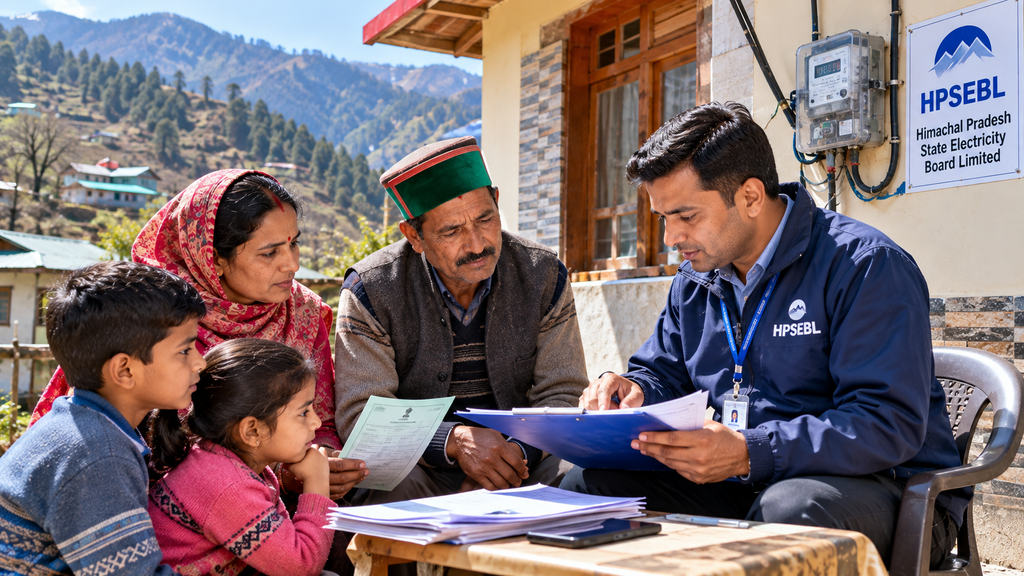
The eligibility conditions documented during the scheme’s implementation included several routes through which a household could qualify.Contemporary implementation details reported from HPSEBL stated that an applicant could qualify if the family belonged to one of the specified categories, including BPL families, families covered under the Antyodaya Anna Yojana or Priority Households. An annual household income ceiling of ₹35,000 was also reported as one qualifying criterion.
The same implementation information also specified a condition concerning the electricity load applied for by the household.Because these criteria originate from the original implementation framework, applicants in 2026 should verify them with the electricity department before relying on an old article or document.
Main Historically Documented Eligibility Categories
The published implementation conditions included:
- BPL household
- Household covered under Antyodaya Anna Yojana
- Priority Household
- Annual income from all sources not exceeding ₹35,000
- Applied domestic load below 2 kW
The categories were described as alternative eligibility routes rather than requirements that every applicant had to satisfy simultaneously.
Is the ₹35,000 Income Limit Still Applicable in 2026?
The ₹35,000 annual income figure is part of the historical eligibility information published around the original implementation of the scheme.It should not automatically be presented as a newly notified 2026 income threshold unless a current HPSEBL or Himachal Pradesh government notification confirms that the same rule remains in force.
This distinction is particularly important for government-scheme articles. A number appearing in a 2019 or 2020 implementation document does not, by itself, prove that the amount has remained unchanged several years later.For anyone applying now, the safest approach is to confirm the current eligibility requirements with the concerned electricity office.
How Many Free Connections Were Planned?
The original government target was 17,550 electricity connections for poor families.The state’s Economic Survey records 4,898 families benefiting during 2019-20 and a further 2,703 eligible families benefiting up to November 30, 2020.
A later Himachal Pradesh government press release stated that 17,550 free electricity connections had been provided to poor families under the Mukhyamantri Roshni Yojana.The 2022-23 Budget Speech provides another important milestone: it stated that 12,765 eligible poor families had been provided free electricity connections, with another 5,000 additional families proposed to receive connections in 2022.
What Benefit Is Provided Under the Scheme?
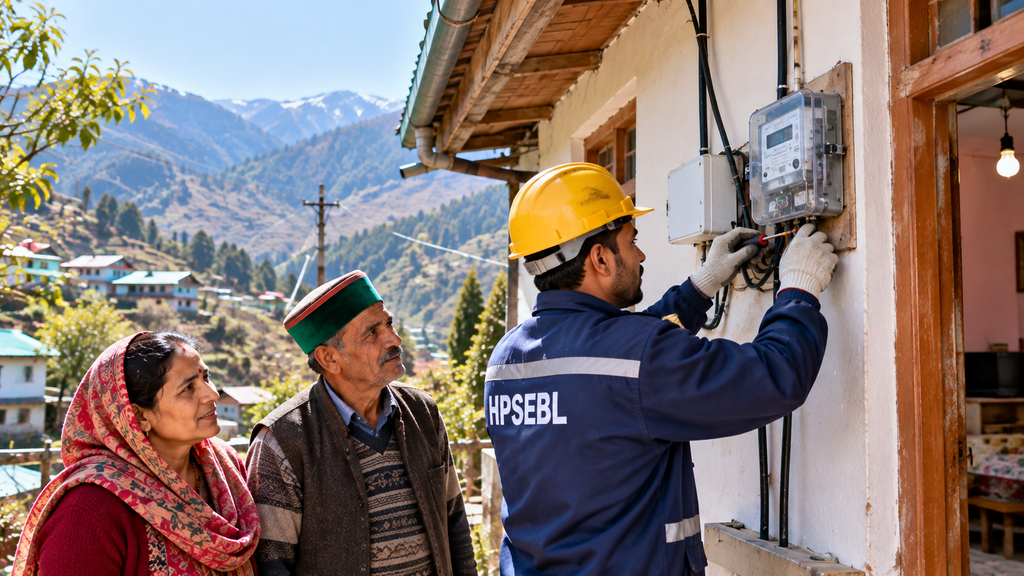
The principal benefit is the provision of a free electricity connection to an eligible household.This means the scheme is fundamentally about reducing the upfront financial barrier to obtaining an electricity connection. It should not automatically be interpreted as a promise that all future electricity consumption will be free.
That distinction is important because a free connection and free electricity consumption are separate policy measures.The original Budget announcement specifically referred to the absence of connection charges for eligible poor householders applying for a new power connection.
Does Mukhyamantri Roshni Yojana Mean Free Electricity Bills?
Not necessarily.The Mukhyamantri Roshni Yojana was designed around free electrification or free electricity connections for eligible households.
Separate electricity-subsidy decisions can change the amount that consumers pay for electricity consumption. For example, reporting in 2022 described a separate expansion of free electricity consumption to 125 units for certain consumers. That was a broader electricity-bill policy and should not be confused with the original Roshni Yojana’s free-connection objective.
Roshni Yojana: primarily associated with free electricity connections for eligible households.
Electricity consumption subsidy: a separate question governed by applicable tariff and subsidy rules.
Who Implements the Scheme?
The implementation was associated with the Himachal Pradesh State Electricity Board/HPSEBL, which operates the state’s electricity distribution system.The economic survey described HPSEBL as the implementing utility for the scheme and stated that government funds would support the release of eligible electricity connections.
This is useful for applicants because the scheme is not primarily an online cash-benefit programme. Its implementation is connected with the electricity connection process itself.
What Documents May Be Required?
The original application information reported requirements including documents relating to the applicant, residence and eligibility.Contemporary reporting mentioned documents such as the A&A form, permanent residence proof and proof concerning the head of the household or legal authority over the premises. Some supporting certificates could be obtained through the relevant local authority, according to the implementation information available at the time.
Depending on the eligibility category, applicants may also need evidence supporting their BPL, Antyodaya, Priority Household or income status.Because documentation requirements can change, applicants should confirm the current list before submitting an application.
Also Read:
- Madhu Babu Pension Yojana 2026: Eligibility, Pension Amount, Application Process and Latest Details
- Ladki Bahin Maharashtra.Gov.In e-KYC Direct Link & Complete Process (August 2026)
How to Apply for Mukhyamantri Roshni Yojana?
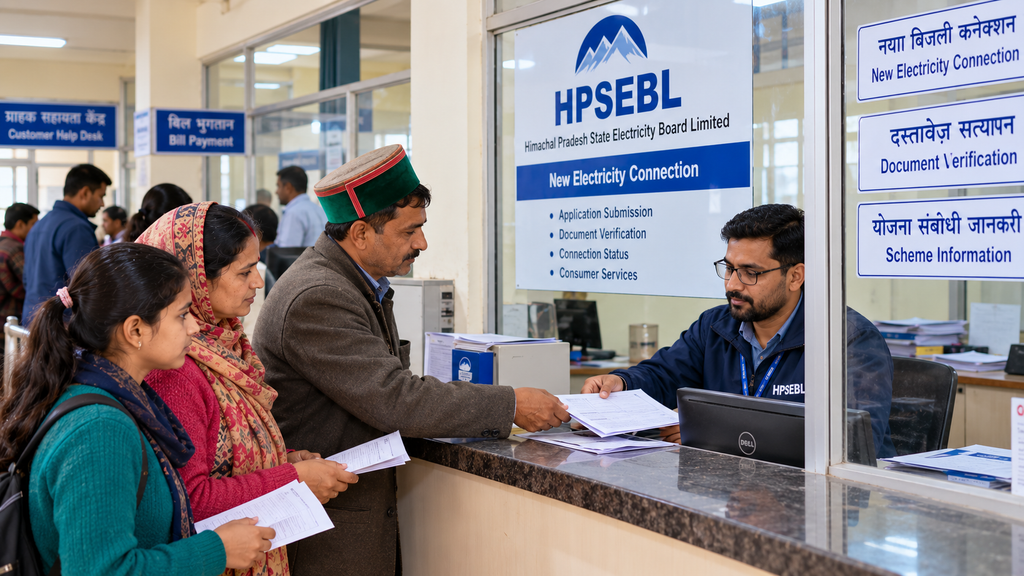
The original implementation process required eligible applicants to approach the nearest electricity-board office for the connection.
Contemporary HPSEBL-related information stated that the head of the family could apply at the nearest electricity-board office and that eligibility documents were required.
For a 2026 applicant, the practical process should be understood as follows:
First, establish whether the household falls within the applicable eligibility category.
Next, keep the relevant identity, residence and eligibility documents ready.
The applicant should then contact the appropriate electricity-board office or current HPSEBL service channel and ask whether the Mukhyamantri Roshni Yojana is currently accepting applications under the original framework or a revised programme.
This last step is particularly important because the readily available official records establish the scheme’s historical implementation but do not, by themselves, establish a fresh 2026 application window.
What Was the Electricity Load Condition?
The historical implementation conditions reported by HPSEBL included an applied household load of less than 2 kW.This condition reflected the domestic nature of the assistance. The programme was intended for basic household electrification rather than high-load commercial or industrial connections.Again, because this is a historical condition, applicants should confirm the current technical requirements before filing an application in 2026.
What the Evidence Suggests
The government records show that Mukhyamantri Roshni Yojana was not merely a proposed policy. It was implemented and produced measurable electricity-connection outcomes.
The 2020-21 Economic Survey documented thousands of beneficiary households during the early implementation period. The 2022-23 Budget Speech later reported 12,765 eligible poor families receiving connections and proposed another 5,000 connections.
A 2021 government press release also referred to 17,550 free connections having been provided.The evidence therefore establishes the scheme’s historical implementation and scale.What it does not establish is that the same 17,550 target, ₹35,000 income threshold or every original administrative condition constitutes a newly announced 2026 programme.That distinction is essential when presenting government-scheme information to readers.
Roshni Yojana and Rural Household Electrification
The scheme also needs to be viewed against India’s broader household-electrification efforts.The national Saubhagya programme was separately used for electricity access to households, while Himachal Pradesh’s own Roshni Yojana focused on providing free household connections to specified poor families.
The state’s energy-policy documentation describes Mukhyamantri Roshni Yojana as a state initiative for free electrification of households.This means that the scheme formed part of a larger transition from electricity access as an infrastructure challenge toward improving affordability and household-level access.
Why the Scheme Matters for Poor Households
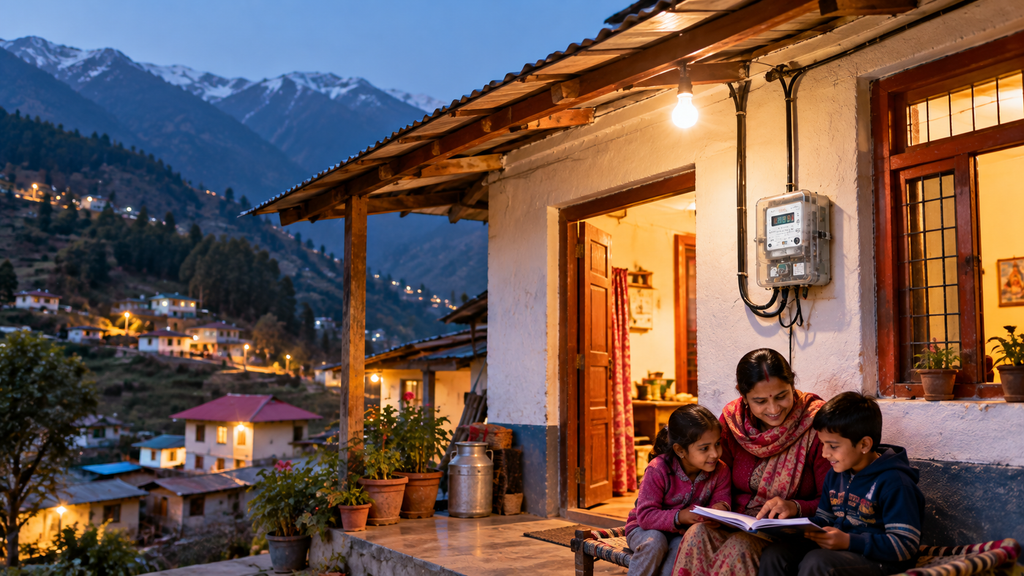
For a household without electricity, the initial connection cost can be a meaningful barrier even when the recurring bill may be manageable.A free connection can reduce that initial hurdle.The benefits can also extend beyond lighting. Electricity enables households to use basic appliances, charge phones and other devices, access digital services and support children’s study routines.
However, connection alone does not guarantee uninterrupted supply or eliminate monthly electricity costs. Those outcomes depend on the wider electricity system, tariffs, subsidies and the household’s consumption.That is why the scheme should be understood as an access intervention, rather than as a universal free-electricity programme.
Is Mukhyamantri Roshni Yojana Available in 2026?
This is the most important current-status question.The available official records confirm the scheme’s existence and implementation, including its 2019-20 launch framework and subsequent beneficiary figures. However, the official Himachal Pradesh government material located for this article does not clearly establish a new 2026 notification with a fresh beneficiary target or revised eligibility rule.
Important Points Before Applying
Applicants should verify the following before relying on information published online:
Eligibility: Check whether the current programme recognises the household’s BPL, Antyodaya, Priority Household or income category.
Connection status: Confirm that the household does not already have an applicable domestic electricity connection.
Load requirement: Verify the permissible connected-load requirement.
Documents: Ask for the current document checklist rather than relying solely on older articles.
Application channel: Confirm the current HPSEBL office or service channel handling the request.
2026 status: Most importantly, establish whether the Roshni Yojana is currently accepting applications under the same framework or under an updated government order.
in canclusion
The Himachal Pradesh Mukhyamantri Roshni Yojana was created to address a practical problem: poor households without electricity connections faced an upfront barrier to household electrification. Government records show that the programme was implemented at significant scale after its 2019-20 announcement.
For readers searching specifically for Mukhyamantri Roshni Yojana 2026, however, the most responsible interpretation is to separate the scheme’s established history from claims of a new 2026 rollout. The original eligibility framework included BPL, Antyodaya, Priority Household and income-based categories, but a current applicant should verify whether those same conditions remain applicable.
The larger significance of the programme is straightforward: electricity access is not merely a utility issue. For poorer households, it is closely connected with education, communication, household productivity and participation in an increasingly digital economy.
FAQ Section
What is Mukhyamantri Roshni Yojana in Himachal Pradesh?
Mukhyamantri Roshni Yojana is a Himachal Pradesh government initiative associated with providing free electricity connections to eligible poor households. It was announced in the state’s 2019-20 Budget, with an original target of 17,550 connections. Government records subsequently documented implementation and beneficiary numbers.
Who was eligible for Mukhyamantri Roshni Yojana?
The original implementation framework included BPL families, households covered under Antyodaya Anna Yojana, Priority Households and households meeting the reported annual-income criterion of up to ₹35,000. An applied domestic load condition was also specified. These historical criteria should be verified before a 2026 application.
Is the electricity connection completely free under the scheme?
The scheme was designed to provide eligible poor households with a free electricity connection, and the original Budget announcement stated that connection charges would not be payable by eligible applicants. This should not automatically be interpreted as free electricity consumption or zero monthly bills.
Is Mukhyamantri Roshni Yojana available in 2026?
The scheme’s historical implementation is documented by Himachal Pradesh government sources. However, the official material located for this article does not clearly establish a new 2026 target or revised application notification. Applicants should therefore verify the current status and rules with the electricity authority before applying.
What was the original target of the Roshni Yojana?
The original target was 17,550 electricity connections for poor families. The state’s Economic Survey recorded 4,898 beneficiaries during 2019-20 and another 2,703 eligible families benefiting up to November 30, 2020.
Which department implements the scheme?
he scheme was implemented through the electricity utility in Himachal Pradesh, with government funding supporting the release of eligible connections. The Economic Survey identifies HPSEBL in the implementation framework.
Does Roshni Yojana provide free electricity every month?
The original Roshni Yojana primarily concerned free electricity connections for eligible households. Free or subsidised electricity consumption is a separate policy issue and should not be automatically attributed to this scheme.
Where should applicants enquire about the scheme?
The original application process directed applicants toward the nearest electricity-board office. For a 2026 application, the current HPSEBL service channel or local electricity office should be contacted to confirm whether the scheme is presently accepting applications and what documents and eligibility rules apply.