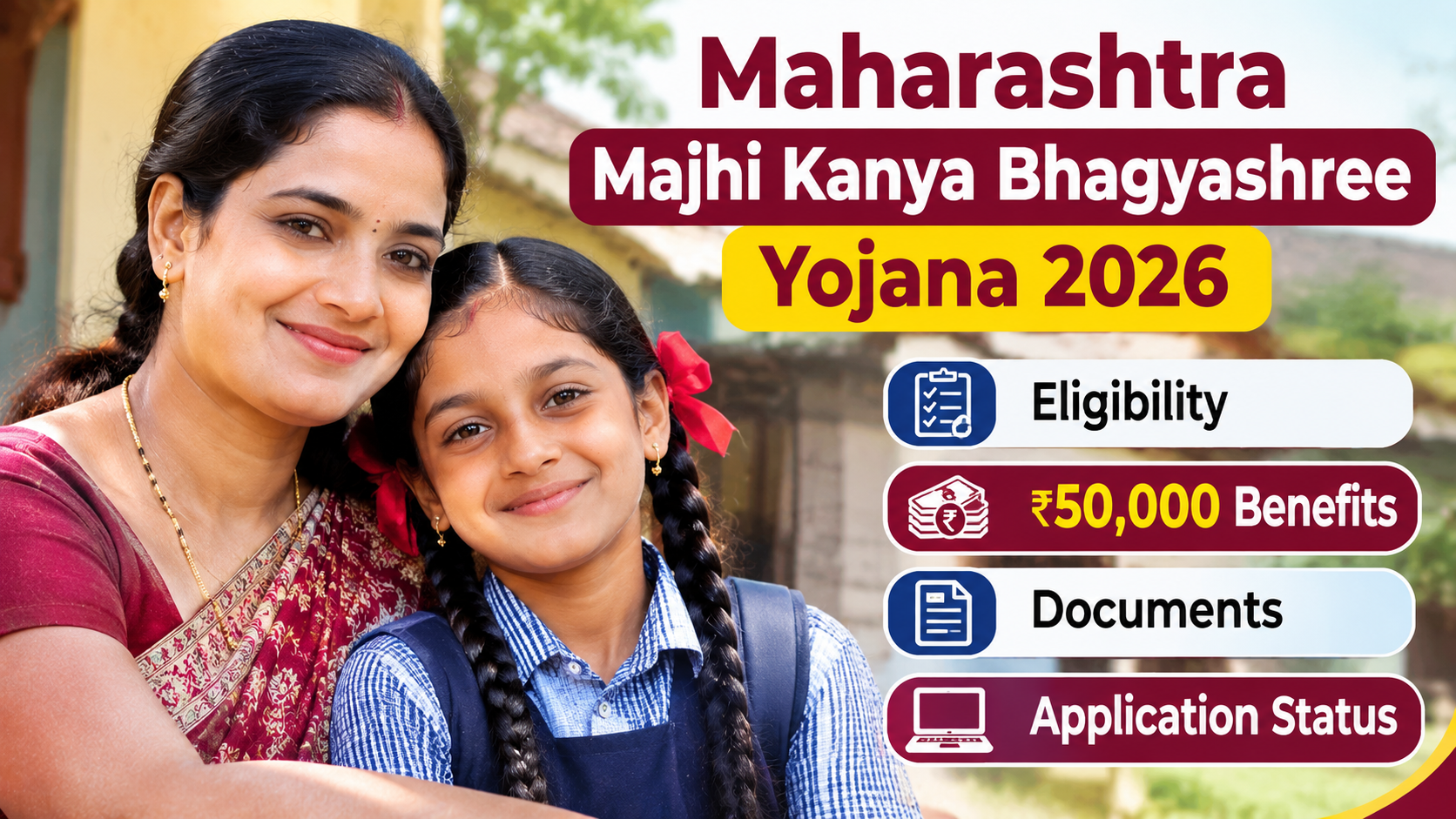
Maharashtra Majhi Kanya Bhagyashree Yojana 2026: The financial security and education of a girl child remain important concerns for many families in Maharashtra. Government assistance programmes have therefore been designed to encourage the birth of girls, improve school enrolment and reduce the economic barriers that can affect their future.
The Maharashtra Majhi Kanya Bhagyashree Yojana was introduced to support these objectives through financial assistance deposited in the name of eligible girls. The scheme was revised in August 2017, with provisions for families following family-planning conditions.
However, the programme has undergone an important policy change. From 1 April 2023, the Maharashtra Government introduced the Lek Ladki Yojana in its place. In 2026, the government is also taking steps to settle outstanding claims under the older programme before its formal closure.
What Is Majhi Kanya Bhagyashree Yojana?
Majhi Kanya Bhagyashree Yojana was a Maharashtra Government initiative administered through the Women and Child Development Department. Its primary purpose was to improve the social and economic position of girls by encouraging their birth, education and better health.
The scheme originally came into effect on 1 April 2016. The government subsequently introduced a revised version through Government Resolution No. Bhagyalakshmi-2017/PR No.107/Ka.3, dated 1 August 2017.
Under the revised programme, eligible families could receive financial assistance through fixed deposits in the name of their daughters after fulfilling specified family-planning conditions.The government intended to make the financial support available at different stages of a girl’s development, rather than providing the entire amount as an immediate payment.
The programme was designed around three broad objectives: improving the female birth ratio, encouraging girls’ education and improving their health and long-term financial security.
Latest Update on Majhi Kanya Bhagyashree Yojana 2026
The most important development for families in 2026 is that Majhi Kanya Bhagyashree Yojana is no longer the active scheme for new beneficiaries.The Maharashtra Government introduced Lek Ladki Yojana from 1 April 2023, replacing the older programme. The new scheme follows a different financial assistance structure and has separate eligibility requirements.
There is another important development. According to a government department restructuring decision reported on 22 October 2026, the old Majhi Kanya Bhagyashree programme will be formally closed after pending beneficiary claims are settled by March 2027.
What does this mean for families?
Families should understand the difference between three situations:
- New applicants: The old scheme should not be treated as open for fresh applications. Eligible families should check Lek Ladki Yojana instead.
- Existing beneficiaries: Families with previously approved benefits or outstanding claims should contact the relevant Women and Child Development office.
- Pending payments: Previous beneficiaries should retain their original approval documents, bank records and scheme-related certificates.
The proposed closure of the old programme does not mean that every outstanding claim has automatically been paid. Beneficiaries should confirm their individual payment position with the responsible department.
Majhi Kanya Bhagyashree Yojana vs Lek Ladki Yojana
| Feature | Majhi Kanya Bhagyashree | Lek Ladki Yojana |
|---|---|---|
| State | Maharashtra | Maharashtra |
| Revised scheme period | From 1 August 2017 | From 1 April 2023 |
| Main objective | Girl-child welfare and education | Girl-child welfare and education |
| Financial structure | Bank fixed deposits | Five-stage assistance |
| Old scheme benefit | ₹50,000 for one eligible daughter or ₹25,000 per daughter for two eligible daughters | Total assistance of ₹1,01,000 |
| Current position | Pending claims being settled | Successor programme |
The two benefit structures should not be confused. The ₹1,01,000 assistance belongs to Lek Ladki Yojana, not the original Majhi Kanya Bhagyashree scheme.
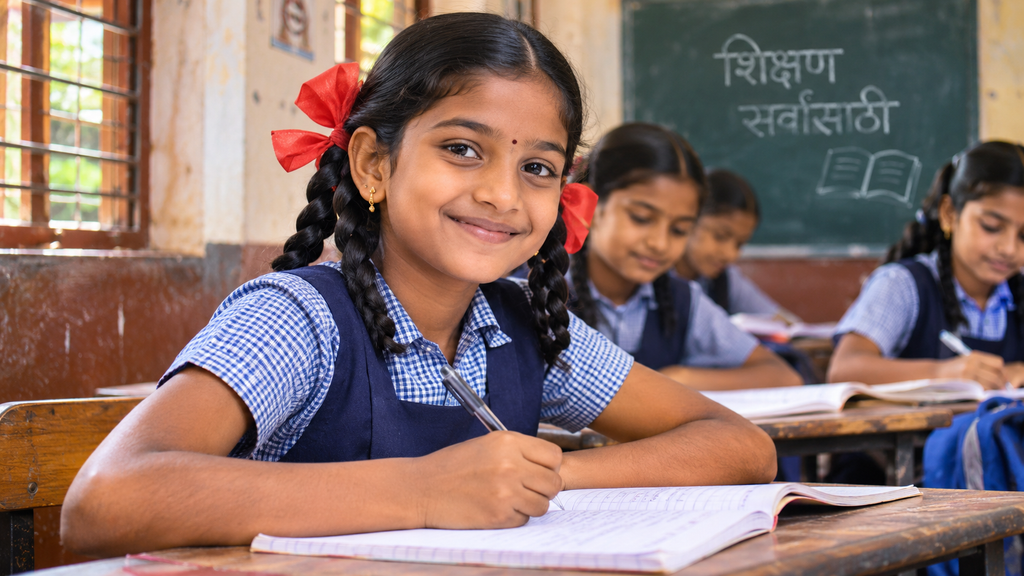
Objectives of Majhi Kanya Bhagyashree Yojana
The original programme was developed to address several social issues affecting girls and their families.
Encouraging the birth of girl children: The scheme aimed to improve the female birth ratio and promote a positive attitude towards daughters.
Supporting education: Financial assistance was structured to encourage families to continue their daughters’ education and reduce the risk of school discontinuation.
Improving health: The programme recognised the importance of better healthcare and a supportive environment for girls.
Preventing gender discrimination: The scheme was part of the state’s broader efforts to discourage gender-based discrimination and promote equal opportunities.
Improving financial security: Fixed deposits created in the girl’s name were intended to provide financial support at important stages of her life.
These objectives remain relevant to the broader policy framework of Maharashtra’s current girl-child welfare initiatives.
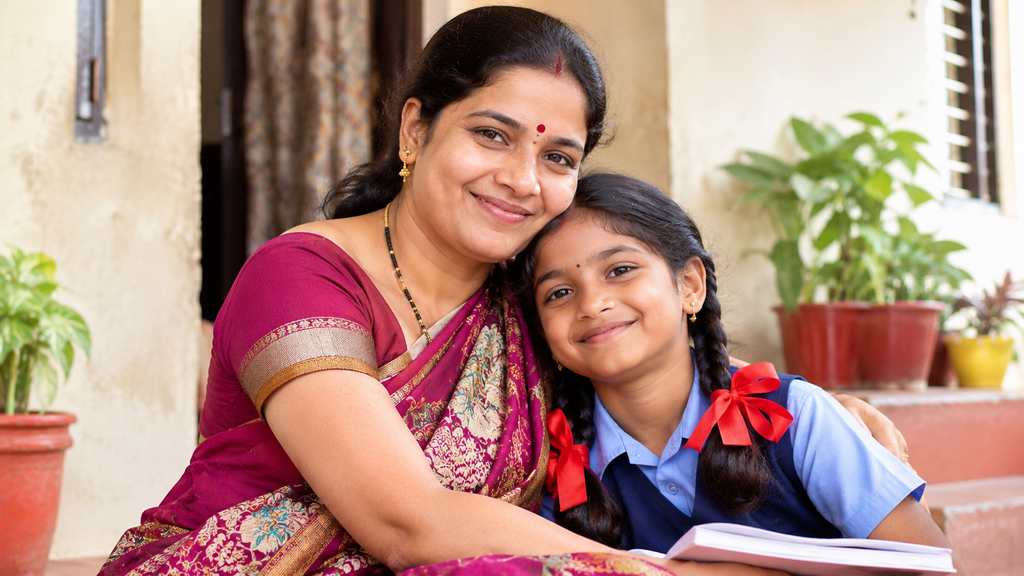
Financial Benefits Under the Original Scheme
The revised Majhi Kanya Bhagyashree Yojana provided assistance through bank fixed deposits.
The amount depended on whether the family had one eligible daughter or two eligible daughters and whether the required family-planning procedure had been completed.
Financial assistance for one daughter
If a family had one daughter and the mother or father underwent the prescribed family-planning operation, the government provided ₹50,000 for investment in a fixed deposit in the girl’s name.
The original government resolution described the following withdrawal structure:
- At six years of age, the girl could receive the eligible interest.
- At twelve years of age, the principal amount was reinvested, with eligible interest payable.
- At eighteen years of age, the principal and eligible interest became payable, subject to the scheme conditions.
Financial assistance for two daughters
For families with two eligible daughters, the government provided ₹25,000 for each daughter, making the total fixed-deposit investment ₹50,000.The financial arrangement followed the same broad six-year investment cycle, with eligible interest at the prescribed stages and the principal and applicable interest payable at eighteen years.The government resolution also specified that the family-planning certificate had to be submitted before the investment was made.
mportant clarification: These are the historical provisions of the revised scheme. They should not be advertised as a new ₹50,000 cash payment available to families applying in 2026.
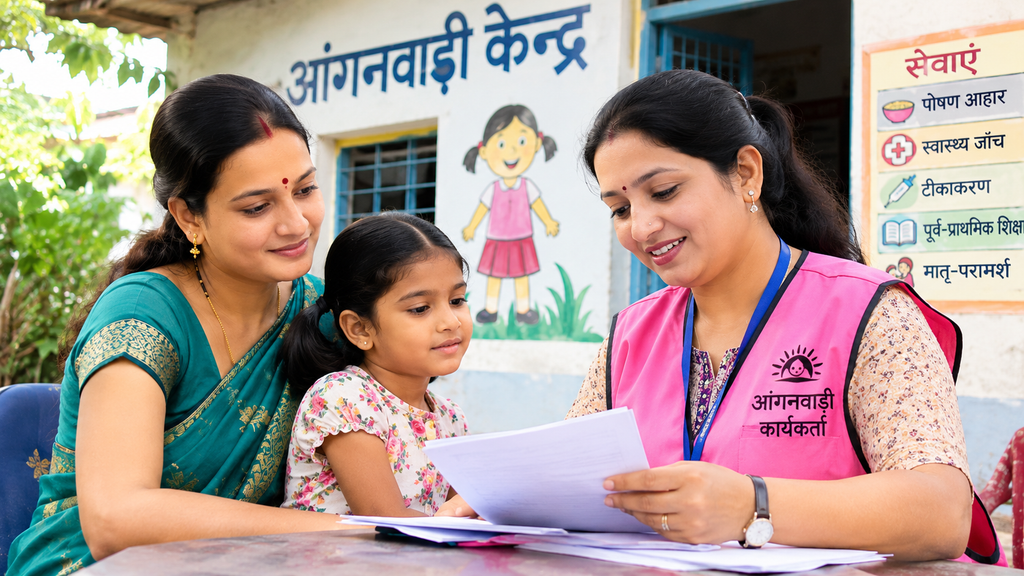
Eligibility Criteria Under Majhi Kanya Bhagyashree Yojana
The revised scheme had specific eligibility requirements. These conditions applied to beneficiaries covered by the programme and should not be confused with the requirements of Lek Ladki Yojana.
Maharashtra residency
The girl’s father was required to be an original resident of Maharashtra.
Annual family income
Under the August 2017 revised government resolution, the scheme was applicable to families across social categories with annual income up to ₹7.50 lakh.
One or two daughters
The scheme provided assistance for eligible families with one daughter or two daughters, subject to the prescribed conditions.
Family-planning operation
The mother or father was required to undergo the prescribed family-planning operation and provide the relevant certificate.
Birth registration
A birth registration certificate for the girl child was required when applying for the benefit.
Educational requirements
For the final benefit at eighteen years, the girl was required to have completed Class 10 and remained unmarried.The original resolution also included provisions for eligible twin girls born during the second delivery and certain orphan girls living in child-care institutions.
Who Was Not Eligible for the Original Scheme?
The original programme included restrictions relating to family composition and compliance with its conditions.For example, the revised government resolution did not provide the benefit in certain cases where the first child was a boy and the second child was a girl, or where the first child was a girl and the second was a boy.
The resolution also stated that if a third child was born, the benefits for the first or second child could be discontinued and amounts already paid could become subject to recovery.The girl also had to satisfy the prescribed educational and marital-status conditions to receive the final amount at eighteen years.
These historical provisions are particularly important for families checking old beneficiary records. The rules of the newer Lek Ladki Yojana are different and should be checked separately.
Documents Required Under the Original Scheme
Families applying under the revised scheme were required to provide supporting documents to establish eligibility.
The principal documents included:
| Document | Purpose |
|---|---|
| Girl child’s birth certificate | Verification of date of birth |
| Parents’ identity documents | Identification |
| Maharashtra residence proof | Residency verification |
| Family-planning certificate | Confirmation of prescribed condition |
| Family income certificate | Income eligibility |
| Bank account details | Fixed-deposit documentation |
| Educational certificate | Verification of schooling |
| Other prescribed declarations | Compliance with scheme conditions |
The precise documents depended on the beneficiary’s circumstances and the applicable government instructions.
For existing beneficiaries, original fixed-deposit certificates, approval letters and previous correspondence may also be useful when approaching the department about an outstanding claim.
How to Check Majhi Kanya Bhagyashree Yojana Application Status in 2026
Since the old scheme has been replaced, families should not assume that a new online application facility is available under its previous name.
However, existing beneficiaries can take the following steps to clarify their application or payment position.
Step 1: Collect the original application details
Keep the application receipt, beneficiary details, approval letter and bank-related records available.
Step 2: Contact the local Women and Child Development office
Approach the relevant district or project-level office responsible for the implementation of the scheme.
Step 3: Request a beneficiary record check
Ask the officials whether the application was approved, whether the fixed deposit was created and whether any payment remains outstanding.
Step 4: Submit supporting documents
If the department requests additional information, provide copies of the relevant certificates and previous scheme documents.
Step 5: Obtain clarification about pending claims
Ask whether the claim is eligible for settlement under the old programme and whether any additional verification is required.
The department’s reported March 2027 closure timeline makes it particularly important for existing beneficiaries to clarify unresolved claims rather than assuming that they will be processed automatically.
Lek Ladki Yojana 2026 – The Replacement Scheme
For families looking for financial assistance for daughters born after April 2023, Lek Ladki Yojana is the relevant programme to understand.The Maharashtra Government introduced this scheme to encourage girls’ education, improve their social security and reduce the financial difficulties faced by eligible families.
Under the programme, eligible girls can receive a total financial benefit of ₹1,01,000 through five instalments, beginning at birth and continuing until the age of eighteen.
Financial assistance under Lek Ladki Yojana
The assistance is distributed at five important stages of a girl’s life.
| Stage | Financial assistance |
|---|---|
| After the birth of a girl | ₹5,000 |
| Admission to Class 1 | ₹6,000 |
| Admission to Class 6 | ₹7,000 |
| Admission to Class 11 | ₹8,000 |
| After completing 18 years | ₹75,000 |
| Total | ₹1,01,000 |
The payment structure connects financial support with educational progress. The final instalment is subject to the prescribed eligibility conditions, including the unmarried-status requirement.
Eligibility for Lek Ladki Yojana 2026
The main eligibility conditions include:
- The girl child must have been born on or after 1 April 2023.
- The family must be a permanent resident of Maharashtra.
- The family must hold a yellow or orange ration card.
- Annual family income must not exceed ₹1 lakh.
- The beneficiary must satisfy the applicable family-composition and family-planning conditions.
- The beneficiary’s bank account must meet the prescribed Maharashtra banking requirements.
- The girl must satisfy the applicable education and other conditions for each instalment.
The scheme also contains provisions for certain families with an existing child and a subsequent eligible girl child, as well as qualifying twin births. Such cases should be checked against the official eligibility rules before submitting an application.
Documents required for Lek Ladki Yojana
The following documents are included in the published scheme requirements:
- Girl child’s birth certificate
- Aadhaar card of the girl, where applicable
- Aadhaar cards of parents
- Yellow or orange ration card
- Family income certificate
- Bank passbook
- School enrolment or bonafide certificate, where applicable
- Family-planning certificate, where required
- Maharashtra residence proof
- Unmarried-status self-declaration for the final instalment
- Voter-list proof for the final benefit, as prescribed
Families should verify the latest online application checklist because the government has been working to simplify the documentation and verification process.
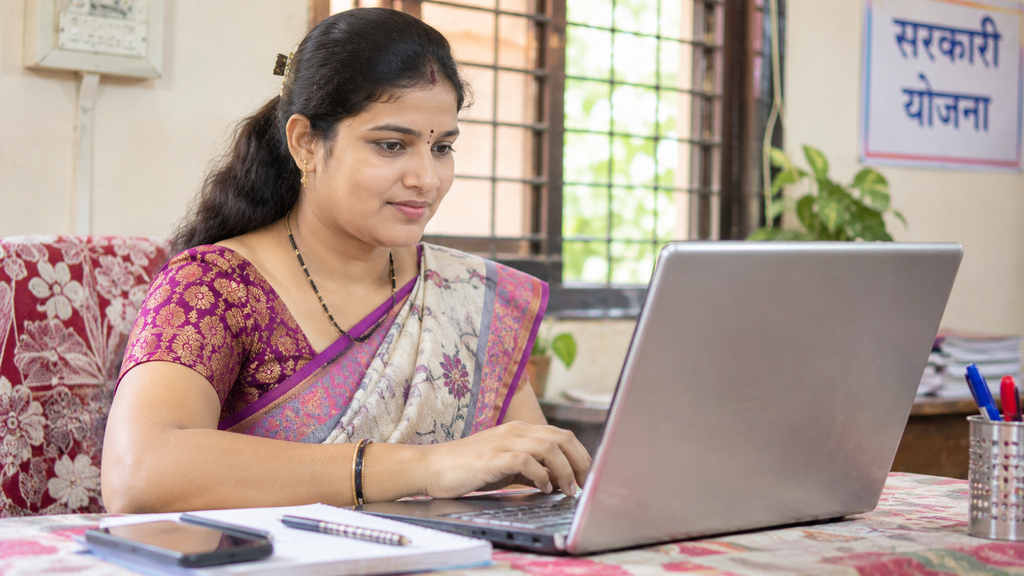
How to Apply for Lek Ladki Yojana Online in 2026
Latest application update
An important administrative change was reported at the end of October 2026. Applications for Lek Ladki Yojana are being shifted to the MahaDBT 2.0 platform, allowing eligible families to complete the process online.
According to the latest available reporting, the Women and Child Development Department announced the online application facility on 31 October 2026. This change is intended to make applications and status checking more accessible.
Online application process
Step 1: Visit the MahaDBT 2.0 portal
Open the official Maharashtra Direct Benefit Transfer portal:MahaDBT 2.0 Official Portal
Step 2: Register as a new user
If you are using the portal for the first time, complete the registration process and create the required login credentials.
Step 3: Log in to your account
Use the available citizen login facility and complete the required authentication.
Step 4: Find Lek Ladki Yojana
Open the scheme application section and look for Lek Ladki Yojana under the Women and Child Development Department.
Step 5: Complete the application
Enter the required beneficiary and family details carefully. Check that the information matches the supporting documents.
Step 6: Upload the required documents
Upload the documents requested by the portal in the specified format and file-size limits.
Step 7: Submit the application
Review the details before submitting the form. Keep the acknowledgement or application reference number for future use.
Step 8: Check application status
Use the portal’s application tracking facility to review the status and any verification requirements.
The latest reporting indicates that the government has also been working towards reducing repeated applications for subsequent instalments. Applicants should follow the instructions displayed on the current portal rather than relying on older application guides.
What Happens to Existing Majhi Kanya Bhagyashree Beneficiaries?
This is an important question for families whose daughters were registered under the older programme.The replacement of Majhi Kanya Bhagyashree Yojana does not automatically establish that all historical beneficiary accounts have been settled. The government has indicated that pending claims will be addressed before the old programme’s formal closure.
Families should therefore distinguish between an approved historical benefit and a fresh application under a different scheme.For example, a family that already has a fixed-deposit certificate under Majhi Kanya Bhagyashree Yojana should not simply submit a new application under Lek Ladki Yojana on the assumption that both programmes provide the same entitlement.
Instead, the family should approach the relevant district Women and Child Development office with its original documents.It is also advisable to obtain written clarification about any unresolved payment, missing bank entry or incomplete beneficiary record.
This approach can help prevent confusion between the two schemes and unnecessary applications.
Why the Transition to Lek Ladki Yojana Matters
The transition from Majhi Kanya Bhagyashree Yojana to Lek Ladki Yojana represents a change in the way the Maharashtra Government structures financial assistance for girls.The earlier programme focused on fixed deposits linked to family-planning conditions. The newer programme distributes assistance at different educational stages.
This difference is significant because a girl child’s financial support is connected not only with her birth but also with her continued participation in formal education.The five-instalment structure provides a clearer connection between government assistance and educational milestones. It also makes the benefit structure easier for families to understand.
However, the effectiveness of such programmes depends on more than the announced financial amount. Timely processing, awareness among eligible households, accurate records and accessible application facilities are equally important.For families in rural Maharashtra, the role of Anganwadi services and local administrative offices remains particularly relevant in helping beneficiaries understand the requirements.
The move towards online applications may improve accessibility, but families with limited digital access will still need reliable assistance and clear information about the available application channels.
Also Check:
- Gruhalakshmi Status Check 2026: Track 34th, 35th and 36th Installment Payment
- Maharashtra Swadhar Yojana 2026: Eligibility, Financial Assistance, Documents and Application Process
- Ladki Bahin Maharashtra.Gov.In e-KYC Direct Link & Complete Process (August 2026)
Important Points Families Should Remember
Before making any application or visiting a government office, keep the following distinctions in mind:
- Majhi Kanya Bhagyashree Yojana is the older programme.
- Lek Ladki Yojana replaced the old programme from 1 April 2023.
- The old scheme’s historical fixed-deposit benefit should not be confused with the newer ₹1,01,000 benefit.
- Lek Ladki Yojana is subject to ration-card, income, residency and other eligibility requirements.
- Existing beneficiaries of the old programme should check pending claims with the relevant department.
- The latest reported online application platform for Lek Ladki Yojana is MahaDBT 2.0.
- Families should rely on government resolutions and departmental instructions when checking their eligibility.
What the Evidence Suggests
The available government resolutions and district-level scheme information establish that Maharashtra has moved from the original fixed-deposit model to a staged financial assistance programme.The newer scheme has a broader connection with education, as payments are linked to school admission and the beneficiary’s age.
The October 2026 administrative changes also indicate an effort to improve the application process through digital platforms. However, the settlement of old claims remains a separate administrative responsibility.For families, the practical priority is to identify which scheme applies to their daughter’s birth date and beneficiary records. This is more important than relying on older online articles that may describe the original programme as currently open for applications.
In Conclusion
Maharashtra’s Majhi Kanya Bhagyashree Yojana played a role in promoting the education, health and financial security of girls through a structured fixed-deposit arrangement. Its replacement by Lek Ladki Yojana marks a shift towards financial assistance connected with educational milestones.
For families in 2026, the most important step is to identify the correct programme before applying. New eligible beneficiaries should examine Lek Ladki Yojana, while families already registered under the older scheme should check their pending claims with the appropriate government office.
The success of these initiatives will ultimately depend on whether eligible girls receive their assistance on time and can continue their education without unnecessary administrative difficulties.
Frequently Asked Questions (FAQs)
Is Majhi Kanya Bhagyashree Yojana available in Maharashtra in 2026?
The original Majhi Kanya Bhagyashree Yojana has been replaced by Lek Ladki Yojana from 1 April 2023. Fresh applicants should check the newer scheme. Existing beneficiaries should contact the Women and Child Development Department regarding pending claims.
How much money was provided under Majhi Kanya Bhagyashree Yojana?
Under the revised 2017 scheme, ₹50,000 was invested in a fixed deposit for one eligible daughter. For two eligible daughters, ₹25,000 was invested for each. The principal and eligible interest were payable according to the prescribed conditions.
What is the new scheme replacing Majhi Kanya Bhagyashree Yojana?
Lek Ladki Yojana is the replacement programme introduced by Maharashtra from 1 April 2023. It provides financial assistance in five stages, with a total benefit of ₹1,01,000 for an eligible girl child.
Who is eligible for Lek Ladki Yojana 2026?
The scheme generally covers eligible girls born on or after 1 April 2023 in Maharashtra families holding yellow or orange ration cards, with annual family income not exceeding ₹1 lakh. Residency, family-planning and other prescribed conditions must also be satisfied.
How much assistance is available under Lek Ladki Yojana?
Eligible girls can receive ₹5,000 after birth, ₹6,000 in Class 1, ₹7,000 in Class 6, ₹8,000 in Class 11 and ₹75,000 after completing eighteen years of age, subject to the scheme conditions. The total is ₹1,01,000.
How can I apply for Lek Ladki Yojana online?
According to the latest October 2026 application update, eligible families can use the MahaDBT 2.0 portal. Applicants need to register or log in, select Lek Ladki Yojana, complete the required information and submit the supporting documents.
Can existing Majhi Kanya Bhagyashree beneficiaries receive pending payments?
Existing beneficiaries should contact their district Women and Child Development office and request verification of their application and outstanding claims. The old programme is expected to be formally closed after pending claims are settled by March 2027, according to the October 2026 report.
Is the ₹1,01,000 benefit available under Majhi Kanya Bhagyashree Yojana?
No. The ₹1,01,000 total assistance is associated with the newer Lek Ladki Yojana. The original revised Majhi Kanya Bhagyashree scheme had a different fixed-deposit structure.